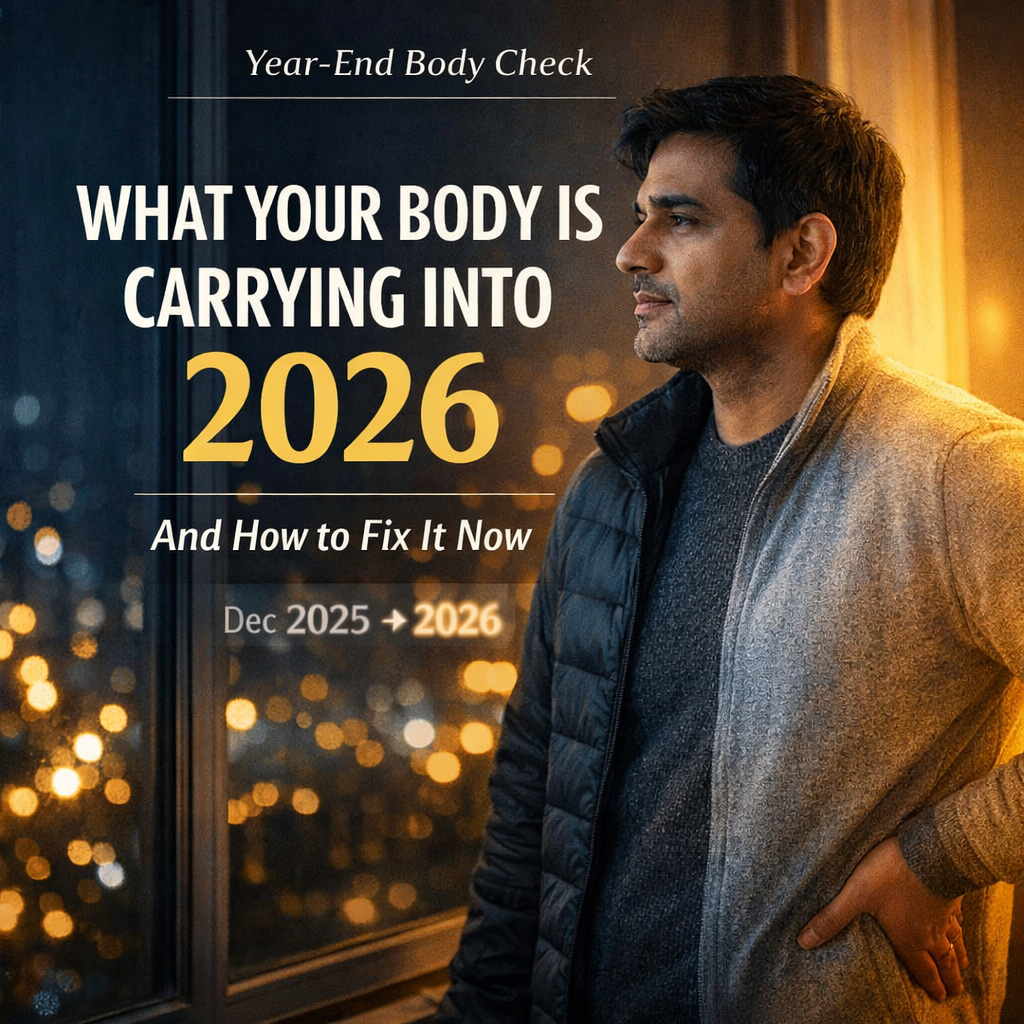
As 2025 winds down, many people are making plans for the New Year — fitness goals, holidays, or lifestyle changes. But there’s one thing that most people overlook: the physical burdens we carry from this year. These aren’t emotional stresses alone — they’re actual biomechanical and musculoskeletal stresses that accumulate in your body.
Pain doesn’t suddenly appear — it builds up through daily habits, posture, inactivity, stress, and repetitive strain, and then gets worse over time. Most individuals are carrying these unresolved physical issues straight into 2026 unless they take proactive steps to correct them now.
🧠 The Hidden Weight Your Body May Be Carrying
Pain isn’t always the result of a single injury. Many modern lifestyle factors contribute to ongoing discomfort — even if you haven’t had a specific trauma. That’s why clinicians often see gradual onset pain patterns resulting from everyday life.
🔸 1. Musculoskeletal Stress From Repetitive Postures
Research shows that awkward or static postures — whether sitting for long hours, slouching at a desk, or hunching over a smartphone — significantly increase the risk of musculoskeletal complaints in the neck, shoulders, and back. In ergonomic studies, awkward positions were strongly linked to restrictions and discomfort in multiple spinal regions and joints. �
Springer
This means that:
prolonged sitting without breaks
static posture during work or study
leaning forward while using devices
can silently contribute to pain that becomes chronic if not corrected.
🔸 2. Lifestyle Habits and Pain Persistence
Lifestyle factors such as physical inactivity, stress, poor sleep, unhealthy diet, and lack of movement are closely associated with chronic pain and its severity. Research shows that such habits not only contribute to pain onset but also perpetuate it over time. �
MDPI
This pattern helps explain why people feel worse at the end of the year:
decreased activity during holidays
irregular sleep patterns
heightened stress
disrupted routines
These elements don’t just affect mood — they directly affect how your body processes pain.
🔸 3. Pain Isn’t Just Physical — It’s Biopsychosocial
In modern musculoskeletal care, pain is understood to be influenced by physical, psychological, and social factors — not just tissue damage. That means long-term pain can become entrenched unless multiple domains are addressed: posture, movement, stress responses, and lifestyle habits. �
PMC
So even if there’s no visible injury, ongoing stress and poor biomechanics can still shape pain perception and make discomfort more persistent.
📈 Modern Studies Confirm These Patterns Are Common
One recent study among physiotherapy and rehabilitation students found high prevalence of discomfort in spinal regions (upper back, lower back, neck) linked to posture and activity patterns. Around three out of four participants were at moderate to high risk for musculoskeletal issues, underlining how daily routines impact body health. �
ResearchGate
These findings — though from a student group — reflect wider patterns seen across adult populations: the cumulative impact of posture, activity level, and lifestyle on the spine and joints.
Add to this data about chronic pain risk being influenced by lifestyle and activity, and the picture becomes clear: the way we live directly affects how we feel — especially over months and years. �
MDPI
🧩 What You Might Be Carrying Into 2026
Here are some common but often overlooked physical patterns that may follow you into the New Year — unless you fix them now:
1. Forward Head Posture & Neck Strain
Daily device use, computer work, and poor desk setup create neck stress that lingers if habits aren’t corrected.
2. Lower Back Tightness from Sitting
Sedentary behavior reduces lumbar flexibility and builds stiffness that often gets worse in winter or during holiday inactivity.
3. Upper Back and Shoulder Tension
Stress, tech use, and poor posture combine to tighten upper back muscles and reduce mobility.
4. Muscle Imbalance & Weak Core
Lack of varied movement patterns weakens stabilizing muscles, leaving joints more susceptible to strain.
5. Recurring Mild Pain That Never Fully “Heals”
The body remembers repeated stress patterns — and pain sensations can persist even when there’s no new injury. Emerging science suggests that chronic pain involves neuroplastic changes in how the nervous system processes signals, making pain more persistent unless addressed holistically. �
Wikipedia
💪 How to Fix These Before 2026 Begins
Here’s a practical year-end reset plan that helps break the cycle of accumulated body strain:
✔ 1. Move Every Hour
Avoid prolonged static positions. Stand, stretch, or walk every 30–40 minutes to reduce stiffness. Even simple movement can improve circulation and tissue flexibility. �
www.ndtv.com
✔ 2. Improve Posture Awareness
Set up your workstation correctly, raise screens to eye level, use lumbar support, and activate core muscles to protect your spine.
✔ 3. Prioritize Sleep and Stress Management
Chronic stress and poor sleep heighten pain perception and reduce healing capacity. Practice sleep routines, relaxation, and breathing exercises.
✔ 4. Strengthen Weak Muscles
Incorporate gentle strengthening and mobility exercises for core, glutes, back extensors, and neck muscles — key areas vulnerable to chronic strain.
✔ 5. Stay Active in Winter
Winter inactivity increases stiffness. Short walks and low-impact movement sustain muscle function and reduce pain tendencies. �
Apollo 24|7
🩺 When to Seek Specialist Help
If pain persists despite lifestyle adjustments — especially if it:
affects daily activities
continues after rest
spreads to multiple areas
wakes you at night
…then a professional assessment can help you understand underlying movement patterns and tailor corrective therapies.
🌟 Final Thought
Pain isn’t something that just happens.
It accumulates through posture, habits, and daily behaviors — and then stubbornly stays unless addressed.
As we approach 2026, the best gift you can give your body isn’t a resolution — it’s awareness and correction of what you’ve been carrying this year.
With intentional movement, posture fixes, stress management, and early care, you can enter the New Year body-aware, flexible, and stronger.
📞 Need Help Resetting Your Body Before 2026?
Call our specialists at +91 91636 95790