Sleep is one of the most natural processes of the human body. For thousands of years, our sleep followed a simple rhythm — light guided our day, darkness guided our rest.
But modern life has quietly rewritten that rhythm.
Today, many people struggle with poor sleep not because of illness, but because their natural sleep cycle is constantly disrupted by daily habits.
What Are Natural Sleep Cycles?
Your body runs on an internal clock known as the circadian rhythm. This clock controls:
when you feel sleepy
when you feel alert
hormone release
body temperature
energy levels
Under natural conditions:
daylight keeps you alert
darkness triggers sleep hormones
sleep follows a predictable cycle every night
Modern lifestyles interfere with this system — often without us realising it.
How Modern Life Disrupts Natural Sleep
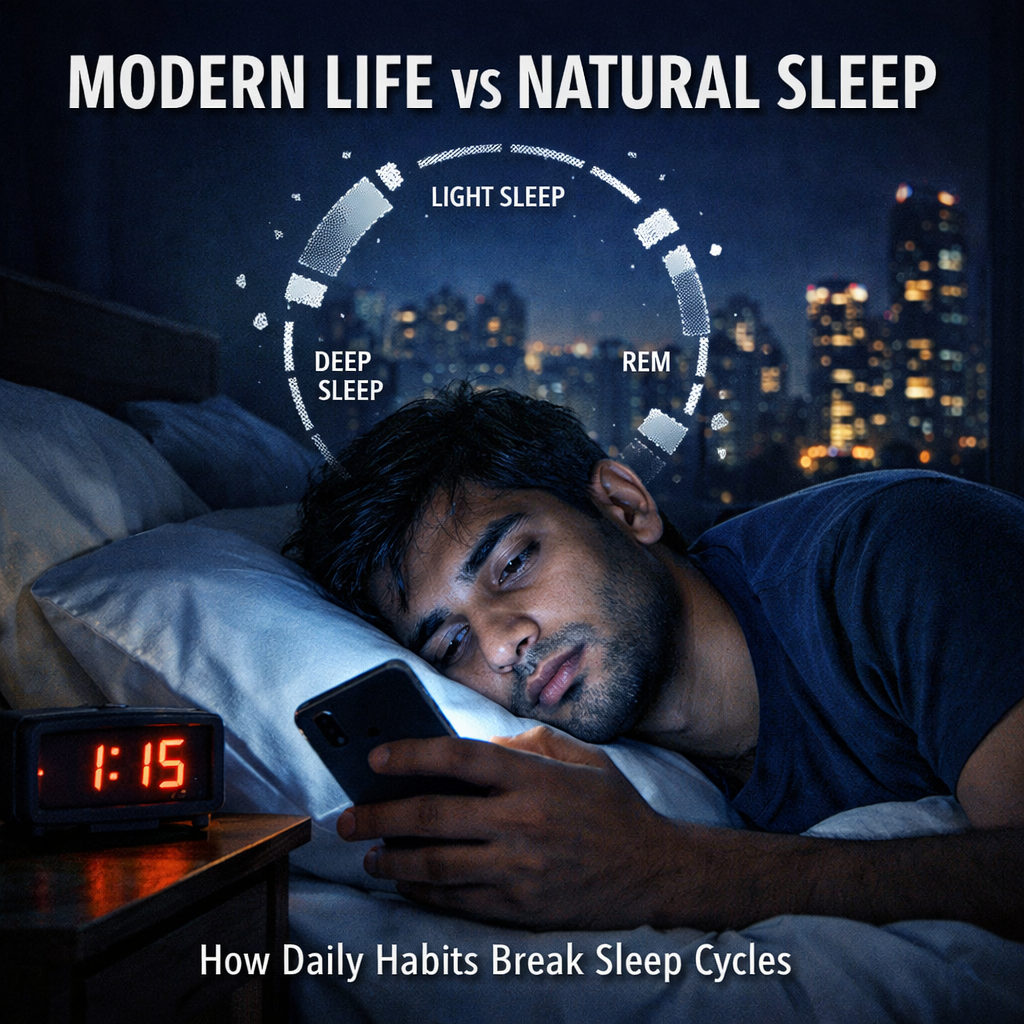
1. Excessive Screen Exposure
Phones, laptops, and televisions emit blue light that:
suppresses melatonin (the sleep hormone)
delays sleep onset
reduces deep and REM sleep
Scrolling late at night tells your brain: “It’s still daytime.”
2. Irregular Sleep Timings
Late nights followed by late mornings, especially on weekends, confuse the body clock.
This leads to:
difficulty falling asleep
light, fragmented sleep
feeling tired despite long sleep hours
Consistency matters more than people realise.
3. High Stress and Constant Alertness
Modern life keeps the nervous system active:
work pressure
notifications
mental overthinking
A body in “alert mode” struggles to enter deep, restorative sleep.
4. Reduced Exposure to Natural Light
Spending most of the day indoors limits sunlight exposure, which is essential for:
setting the sleep-wake cycle
regulating energy levels
Without proper daylight cues, the body loses track of time.
5. Late Meals and Stimulants
Heavy dinners, caffeine, and late-night snacking:
increase digestion activity
raise body temperature
delay sleep readiness
The body struggles to rest while still processing food.
What Happens When Sleep Cycles Are Disturbed
Disrupted sleep doesn’t just cause tiredness. Over time, it can lead to:
increased pain sensitivity
muscle stiffness
poor recovery
weakened immunity
mood changes
reduced focus and memory
Many people don’t connect these issues to sleep — but the link is strong.
Why Sleeping Longer Doesn’t Fix the Problem
A common misconception is that more hours equal better sleep.
In reality:
poor timing = poor quality
fragmented sleep = incomplete recovery
If deep and REM sleep are reduced, the body never fully heals — no matter how long you stay in bed.
Signs Your Natural Sleep Cycle Is Disturbed
You may notice:
difficulty falling asleep
waking up multiple times
waking up tired
body stiffness in the morning
increased irritability
reliance on caffeine
These are signals that the sleep cycle needs correction.
How to Support Natural Sleep Cycles in Modern Life
✔ Maintain Consistent Sleep Timing
Go to bed and wake up at similar times daily — even on weekends.
✔ Reduce Screen Use at Night
Avoid screens at least 60 minutes before sleep.
✔ Get Daylight Exposure
Spend time outdoors or near natural light in the morning.
✔ Create a Wind-Down Routine
Slow activities help the nervous system relax before bed.
✔ Eat Light at Night
Finish dinner early and avoid stimulants late in the day.
Sleep Is a Biological Need, Not a Luxury
Modern lifestyles often treat sleep as flexible — something to adjust, cut short, or compensate for later.
But the body doesn’t work that way.
Sleep cycles are foundational to healing, recovery, and balance.
When they are disrupted, the body adapts — but at a cost.
Final Thought
Modern life isn’t going to slow down — but your sleep doesn’t have to suffer.
Understanding how daily habits affect natural sleep cycles allows you to make small changes that protect your health in a big way.
Better sleep isn’t about effort.
It’s about alignment.
And when sleep cycles are respected, the body heals quietly — every single night.