
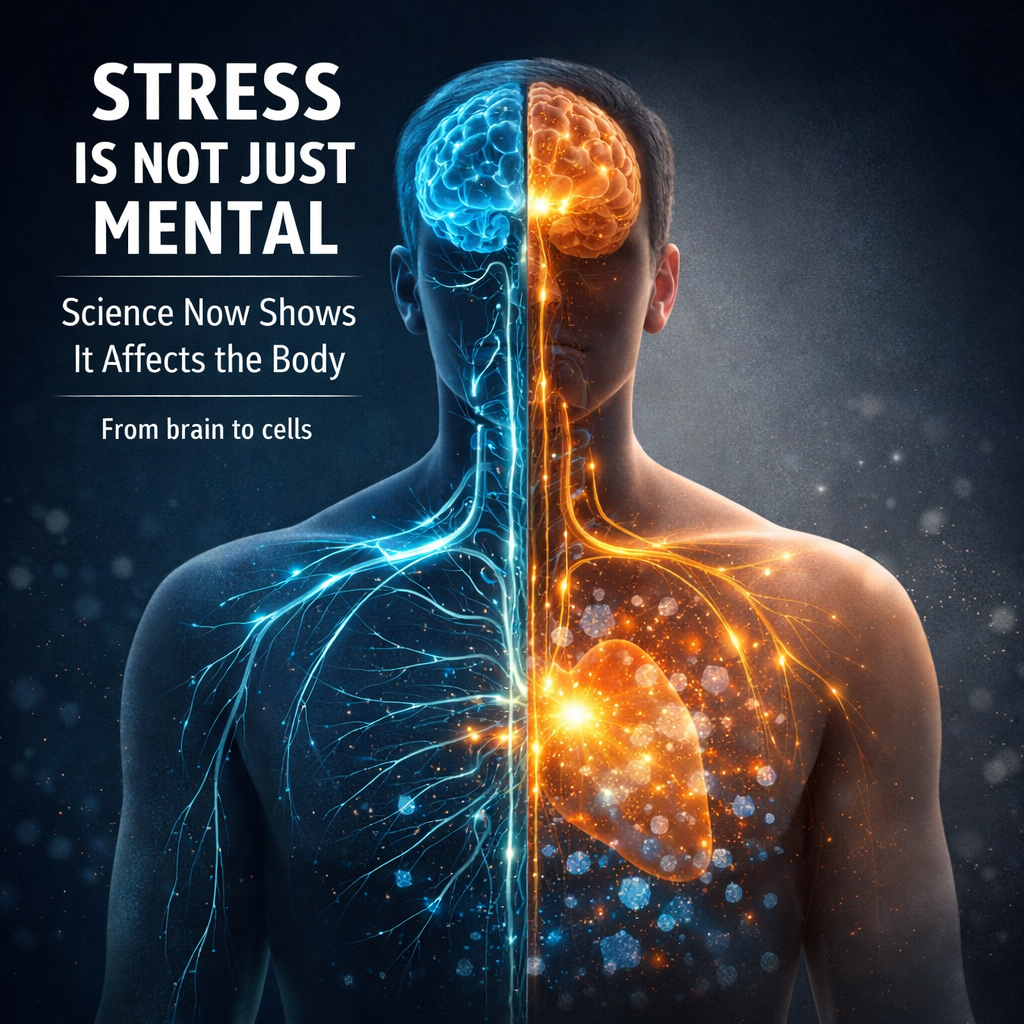
For a long time, stress was dismissed as something abstract — a problem of the mind, emotions, or attitude. People were told to “relax,” “think positive,” or simply “manage it better.”
Modern science now tells a very different story.
Stress is not just mental.
It is biological, measurable, and physical — affecting the body down to the smallest cellular level.
The Old View of Stress: A Mental Burden
Traditionally, stress was understood as:
worry
anxiety
emotional pressure
If scans were normal and blood tests looked fine, stress was often brushed aside as something “psychological.”
This separation between mind and body created a dangerous misunderstanding — that stress couldn’t cause real physical damage.
Science now proves otherwise.
The New Understanding: Stress Is a Whole-Body Event
When stress occurs, the body does not treat it as a thought.
It triggers a full physiological response, involving:
the brain
the nervous system
hormones
immune function
muscles
metabolism
Stress activates survival pathways designed for short-term danger — not long-term modern living.
What Happens Inside the Body During Stress
1. The Nervous System Goes on High Alert
The sympathetic nervous system (fight-or-flight mode) switches on.
Heart rate increases.
Muscles tense.
Breathing changes.
This is useful during danger — but harmful when it stays active for weeks or months.
2. Stress Hormones Flood the Body
Cortisol and adrenaline are released.
In the short term, they help you react quickly.
In the long term, they:
disrupt sleep
increase inflammation
alter blood sugar
affect digestion
weaken recovery
3. Stress Reaches the Cellular Level
Recent research shows that stress affects:
mitochondria (energy production)
gene regulation
inflammatory pathways
Tiny regulators like microRNAs have been found to control how cells respond to stress — proving stress leaves molecular fingerprints inside the body.
This means stress is not imagined.
It is recorded.
Why Stress Shows Up as Physical Symptoms
Many people experience:
unexplained pain
stiffness
fatigue
headaches
digestive issues
poor sleep
Even when scans and reports appear normal.
This happens because stress often disrupts regulation, not structure.
The system is overloaded — not broken.
Stress and Pain: A Strong Biological Link
Science now confirms:
stress lowers pain tolerance
chronic stress sensitises nerves
the brain amplifies pain signals under stress
This explains why:
pain worsens during stressful periods
old injuries flare up under pressure
recovery slows when stress is ignored
Pain is not always damage — sometimes it is over-activation.
Why “Just Relax” Doesn’t Work
If stress were purely mental, simple advice would fix it.
But stress involves:
hormones
nervous system patterns
sleep disruption
cellular changes
That’s why:
rest without recovery doesn’t help
vacations don’t always reset stress
symptoms return quickly
Stress must be addressed systemically, not superficially.
The Long-Term Impact of Unmanaged Stress
Chronic stress contributes to:
persistent pain
metabolic disorders
immune dysfunction
accelerated aging
mental burnout
reduced quality of life
The body compensates — until it can’t.
What Science Is Teaching Us Now
Modern medicine is shifting from asking:
“What symptom do you have?”
To asking:
“What system is dysregulated?”
Stress is now seen as:
a biological load
a regulatory issue
a health risk — not a personality trait
What This Means for Everyday Life
Understanding stress as physical changes how we respond to it.
It means:
rest is medical, not lazy
recovery is essential, not optional
early care matters
ignoring stress has consequences
Managing stress is not about comfort — it’s about protecting health.
Final Thought
Stress is no longer just something you feel.
It is something your body records, responds to, and remembers.
Science now shows that caring for stress is as important as caring for posture, sleep, movement, and nutrition.
Because when stress stays unaddressed, the body eventually speaks — through pain, fatigue, and breakdown.
Listening early makes all the difference.