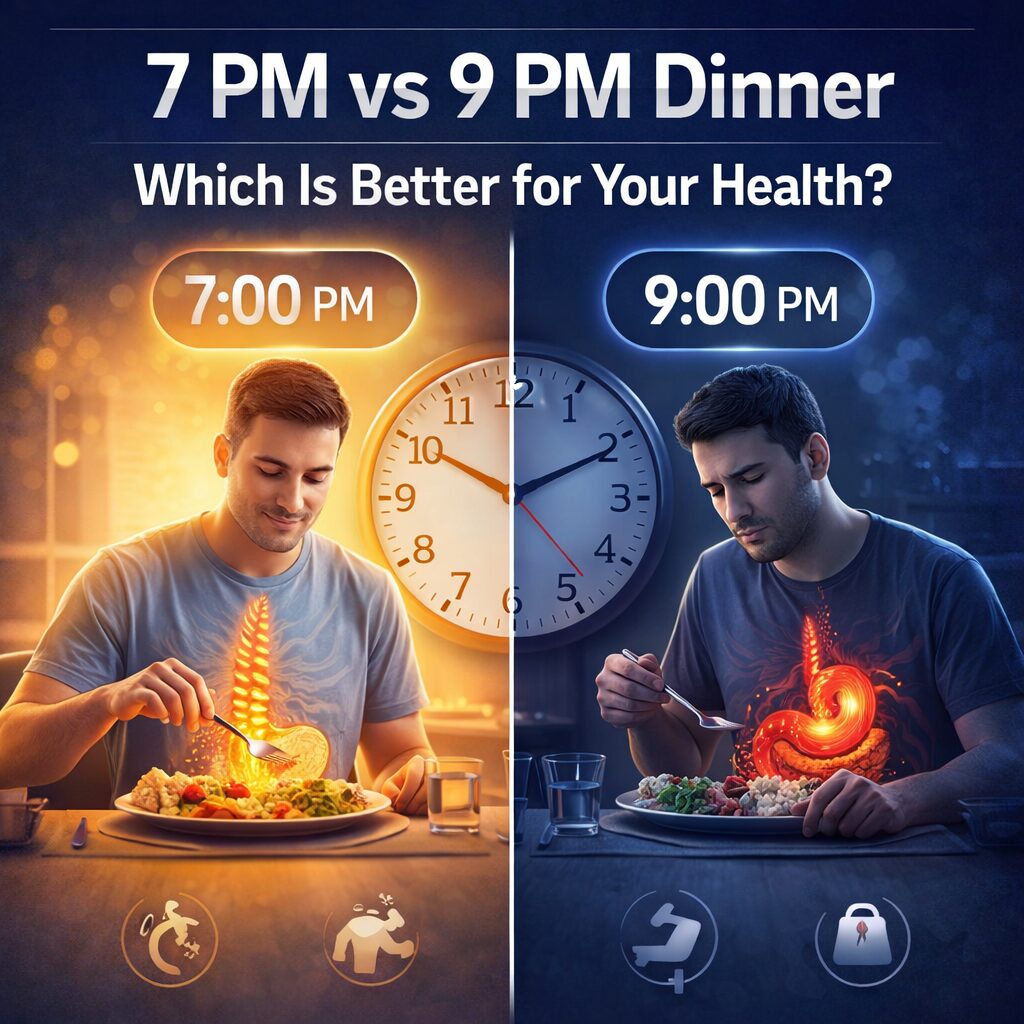
Dinner timing may seem like a small lifestyle choice, but it has a significant impact on your overall health. In today’s fast-paced life, many people end up eating dinner late—often around 9 PM or even later.
However, doctors and health experts suggest that when you eat is just as important as what you eat. Your dinner timing can influence digestion, metabolism, sleep quality, and even long-term health conditions.
So, is eating at 7 PM better than 9 PM? Let’s explore in detail.
Understanding Your Body Clock (Circadian Rhythm)
Your body operates on a natural internal clock known as the circadian rhythm, which regulates:
Digestion
Hormone release
Sleep cycles
Metabolism
During the daytime, your body is more active and efficient at processing food. As evening approaches, your metabolism begins to slow down, preparing your body for rest.
This means that late-night eating goes against your body’s natural rhythm, which can affect how food is digested and stored.
Why Dinner Timing Matters More Than You Think
Many people focus only on calories and food quality, but timing plays a crucial role in how your body uses that food.
Eating late can:
Slow down digestion
Disrupt sleep
Increase fat storage
Affect hormone balance
On the other hand, eating earlier allows your body to process food efficiently before sleep.
Benefits of Eating Dinner at 7 PM
Eating dinner earlier in the evening is widely recommended for better health.
1. Improved Digestion
When you eat at 7 PM, your body has enough time to digest food properly before bedtime. This reduces the risk of:
Bloating
Gas
Indigestion
2. Better Sleep Quality
Going to bed with a full stomach can disrupt sleep. Early dinner allows your body to relax, leading to:
Deeper sleep
Reduced night-time discomfort
Better recovery
3. Supports Healthy Weight Management
Eating early aligns with your body’s metabolism, helping:
Better calorie utilization
Reduced fat storage
Improved metabolic function
4. Lower Risk of Acid Reflux
Lying down soon after eating can cause acid reflux. Early dinner reduces this risk significantly.
5. Better Hormonal Balance
Eating earlier supports proper insulin function and helps maintain stable blood sugar levels.
Effects of Eating Dinner at 9 PM
Eating at 9 PM is common, but regular late dinners may have certain drawbacks.
1. Slower Metabolism
At night, the body burns fewer calories, which may lead to:
Increased fat storage
Reduced energy utilization
2. Digestive Discomfort
Late meals can cause:
Heaviness
Acidity
Indigestion
3. Poor Sleep Quality
A heavy or late dinner can interfere with sleep by causing:
Restlessness
Night awakenings
Reduced sleep quality
4. Increased Risk of Weight Gain
When digestion slows down, excess calories are more likely to be stored as fat.
5. Impact on Long-Term Health
Regular late-night eating has been linked to:
Obesity
Metabolic disorders
Poor gut health
What If Your Schedule Doesn’t Allow Early Dinner?
In reality, many people cannot eat at 7 PM due to work or personal commitments. If you have to eat later, you can still reduce the negative effects.
Practical Tips:
Maintain a gap of 2–3 hours before sleep
Keep dinner light and balanced
Avoid heavy, oily, and fried foods
Limit sugar and processed food at night
Take a short walk after eating
Avoid lying down immediately after dinner
What Should a Healthy Dinner Look Like?
Dinner should be light, nutritious, and easy to digest.
Ideal Dinner Includes:
Lean protein (dal, paneer, eggs, chicken)
Fiber-rich vegetables
Whole grains in moderate portions
Healthy fats
Avoid at Night:
Heavy fried foods
Excess sugar
Large portions
Highly processed foods
Consistency Matters More Than Perfection
While eating at 7 PM is ideal, the most important factor is consistency.
Try to eat at the same time every day
Avoid frequent late-night meals
Maintain a balanced diet
Follow a routine that suits your lifestyle
Even small improvements in timing can lead to noticeable health benefits over time.
Final Thoughts
When it comes to dinner timing, earlier is generally better. Eating at 7 PM supports better digestion, improved sleep, and overall health.
However, if your schedule requires a later dinner, making smart food choices and maintaining proper gaps before sleep can still help you stay healthy.
Your body responds not just to what you eat—but also to when you eat. Making mindful changes in your routine can go a long way in improving your long-term well-being.