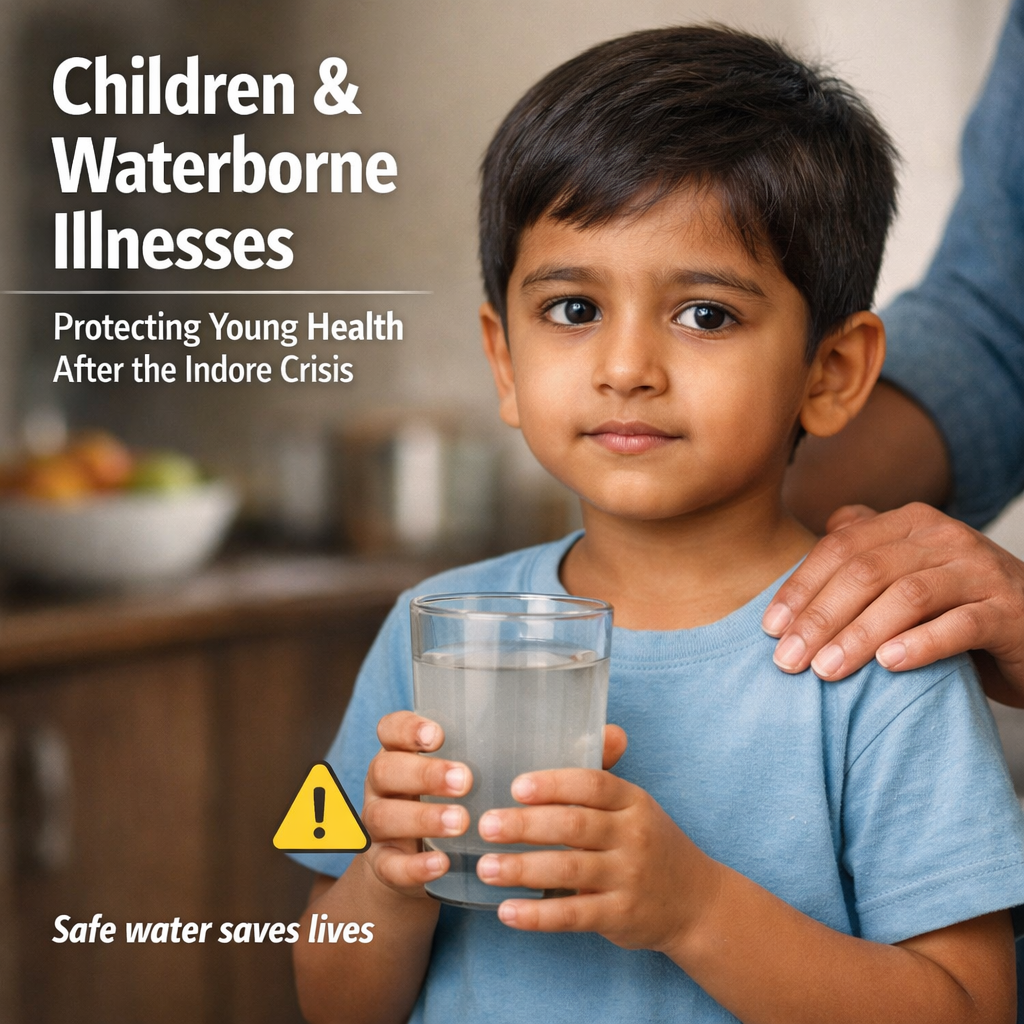
The recent water contamination crisis in Indore and nearby areas like Mhow has underscored a critical public health risk that affects everyone — especially children. Over the past weeks, dozens of residents, including children, have fallen ill after consuming contaminated water containing harmful bacteria and pathogens. Parents and caregivers are now asking an urgent question:
How can we protect young children from waterborne diseases when clean water is compromised? �
www.ndtv.com
Why Children Are More Vulnerable
Children are more susceptible to waterborne illnesses for several reasons:
Immature immune systems make it harder to fight infections. �
World Health Organization
They drink more water per unit of body weight than adults.
Symptoms can escalate more rapidly in infants and young kids.
Exposure to contaminated water can impact growth and development. �
teriin.org
In the recent situation, dozens of individuals including young children developed symptoms such as vomiting, diarrhoea, and jaundice after drinking contaminated water in the Mhow area of Indore district. �
www.ndtv.com
Common Waterborne Diseases in Children
Waterborne illnesses are typically caused by bacteria, viruses, or parasites that enter drinking water through sewage leaks, poor sanitation, or pipeline contamination. Common diseases include:
Acute diarrhoea and gastroenteritis
Typhoid fever
Hepatitis A
Cholera
Dysentery
Jaundice-like infections (often linked to hepatitis or bacterial toxins) �
healthians
In outbreaks like the one in Indore, contaminated water has been linked to symptoms ranging from diarrhoea and stomach cramps to dehydration and fever, prompting urgent medical care. �
Business Standard
Early Signs to Watch in Children
Children exposed to contaminated water may show early signs including:
Loose stools or sudden diarrhoea
Frequent vomiting or nausea
Fever or chills
Abdominal pain or cramps
Signs of dehydration — dry mouth, lethargy, reduced urination
Unusual irritability or lethargy in infants �
Business Standard
Infants and toddlers may also become unusually fussy or refuse to eat. If any of these symptoms persist, seek medical care immediately.
Practical Precautions Parents Can Take Now
1. Always Provide Safe Drinking Water
✔ Boil all drinking water for at least 1 minute before use — boiling kills most bacteria and viruses. �
✔ Use water filters or purifiers at home if available.
✔ Avoid giving raw tap water to children or using it to prepare infant formula.
Apollo Clinic Guwahati
2. Practice Strict Hygiene
✔ Wash hands frequently — especially before meals and after toilet use. �
✔ Wash fruits and vegetables with safe water before eating.
✔ Avoid letting children play in or drink water from puddles or roadside water.
UNICEF
3. Support Hydration
Children losing fluids from diarrhoea or vomiting can become dehydrated quickly.
✔ Offer safe, boiled, and cooled water frequently.
✔ Consider oral rehydration solutions (ORS) if dehydration signs appear.
✔ Avoid sugary drinks unless recommended by a physician.
4. Be Cautious with Infant Feeding
For babies under 6 months, safe feeding is particularly crucial:
✔ Prepare formula or feeds only with boiled and cooled water. �
✔ Keep feeding bottles clean and sterilized.
Apollo Clinic Guwahati
5. Monitor and Act Early
Dehydration and severe infections can progress quickly in children.
Seek medical attention promptly if you observe:
Persistent diarrhoea
Blood in stools
High fever
Severe dehydration
Rapid breathing or unusual sleepiness
Early intervention reduces the risk of complications.
Long-Term Awareness
Contaminated drinking water isn’t unique to one city — it’s a wider public health risk in urban systems where water supply and sewage infrastructure may be compromised. �
www.ndtv.com
Children’s environmental health experts emphasize that inadequate clean water and sanitation are major contributors to childhood illnesses and mortality worldwide, particularly in developing regions. �
World Health Organization
Final Thought
When water safety is compromised, children bear the brunt of the impact — often silently at first, then rapidly as symptoms emerge. Recognising early signs, practising strict hygiene, ensuring safe drinking water, and seeking timely medical care are essential steps parents and communities must take — not just in times of crisis, but as everyday vigilance.
Protecting children’s health starts with clean water, awareness, and swift action.