The holiday season is a time for relaxation, entertainment, and reconnecting with friends and family. But for many students and young adults, Christmas break also means long hours of screen time — whether it’s binge-watching shows, gaming marathons, endless social scrolling, or catching up on online learning.
While screens are fun and useful, this seasonal surge in screen use isn’t without cost. Recent research links prolonged digital device use with worsening posture, increased neck and back pain, and other musculoskeletal problems — especially during extended breaks like Christmas when routine movement decreases and screen hours balloon. �
ResearchGate
In this blog, we’ll explore why holiday screen overload contributes to pain and share practical tips to protect your body — just in time for Christmas and the New Year.
🎄 Why Screen Time Surges Over Christmas Break
During school holidays and winter breaks:
Students spend more time gaming and on social media
Families watch movies and videos together
Study and online classes continue intermittently
Outdoor physical activity drops because of cold weather
This combination increases total sedentary time and sustained postures that strain muscles and joints — especially in the neck, shoulders, and lower back. �
ResearchGate
📱 What Research Says About Screen Time and Musculoskeletal Pain
A 2025 scoping review found that prolonged use of portable electronic devices — phones, tablets, laptops — is significantly associated with musculoskeletal pain, especially in the cervical (neck) and lumbar (lower back) regions. These effects have become more prevalent with higher screen usage in urban populations. �
ResearchGate
A recent Indian study also showed that teenagers and young adults are increasingly presenting with neck, shoulder, and upper back pain due to long hours on screens paired with poor posture and little movement. �
The Indian Express
Another notable project from AIIMS reported that teenagers are developing forward posture, reduced flexibility, and back discomfort connected directly to sedentary habits and screen dependency. �
The Times of India
Collectively, these reports underline that screen overload — especially in holiday periods — can seriously stress young bodies if habits aren’t adjusted.
🧠 How Screen Time Causes Physical Strain
It’s not just the hours of screen use — it’s how your body is positioned while using screens that matters:
🔹 Forward Head Posture
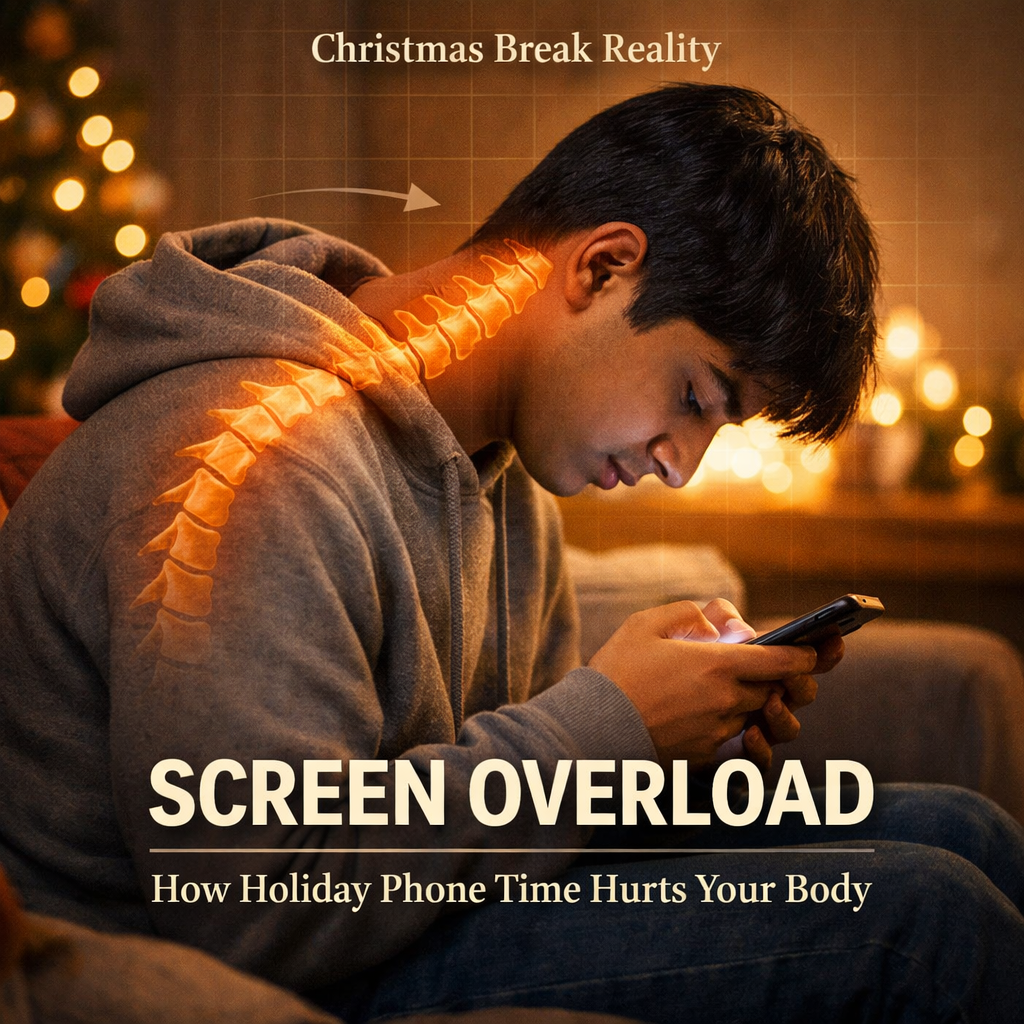
When you look down at a phone or laptop, your head moves forward relative to your spine. This increases compressive force on the neck and upper back — sometimes called “tech neck.” �
Wikipedia
🔹 Static Sitting
Sitting or lying in one posture for hours reduces muscle engagement and circulation, leading to stiffness and pain. �
ResearchGate
🔹 Rounded Shoulders & Slouched Back
Without conscious posture control, shoulder and chest muscles tighten while back muscles weaken — increasing shoulder and upper back pain. �
ResearchGate
🔹 Reduced Movement
Holiday routines often replace active play or exercise with prolonged sedentary time, compounding muscle imbalance and stiffness. �
ResearchGate
💡 Signs Your Screen Habits Are Causing Pain
Watch for:
Neck or shoulder stiffness after long sessions
Dull ache in lower back after gaming or studying
Headaches that follow long screen use
Reduced flexibility or tightness in neck/upper back
Pain that doesn’t improve with simple rest
These symptoms often get worse with repeated screen time over several days, typical during Christmas break.
🛠️ How to Protect Your Body During Holiday Screen Time
You don’t have to give up screens entirely, but a few smart habits can make a huge difference:
✅ 1. Set a Movement Break Timer
Stand up, stretch, or walk around every 30–40 minutes.
Movement resets muscles and reduces stiffness.
✅ 2. Raise Screens to Eye Level
Bring your device up rather than bending your neck down.
This reduces neck strain and forward head posture. �
Wikipedia
✅ 3. Use Back Support
Sitting with lumbar support or against a wall helps maintain better spinal alignment. �
Wikipedia
✅ 4. Stretch Key Muscle Groups
Simple neck, shoulder, and chest stretches between sessions can release tension and improve posture.
✅ 5. Alternate Activities
Balance screen time with walks, outdoor play, or family physical activities — even in short bursts.
🎯 When to Seek Professional Help
If pain becomes:
frequent
persistent
interfering with sleep or daily tasks
associated with numbness or weakness
seek evaluation from a specialist. Early intervention prevents patterns turning into chronic issues.
🌟 Final Thought
Christmas break is a time for joy, connection, and relaxation — it shouldn’t end with neck stiffness or back pain. Recognizing how screen overload affects posture and muscles empowers you to enjoy your break while keeping your body pain-free.
With a few simple posture and movement habits, you can protect your musculoskeletal health now and carry better habits into the New Year.
📞 Need Expert Guidance or Evaluation?
Call our specialists at +91 91636 95790