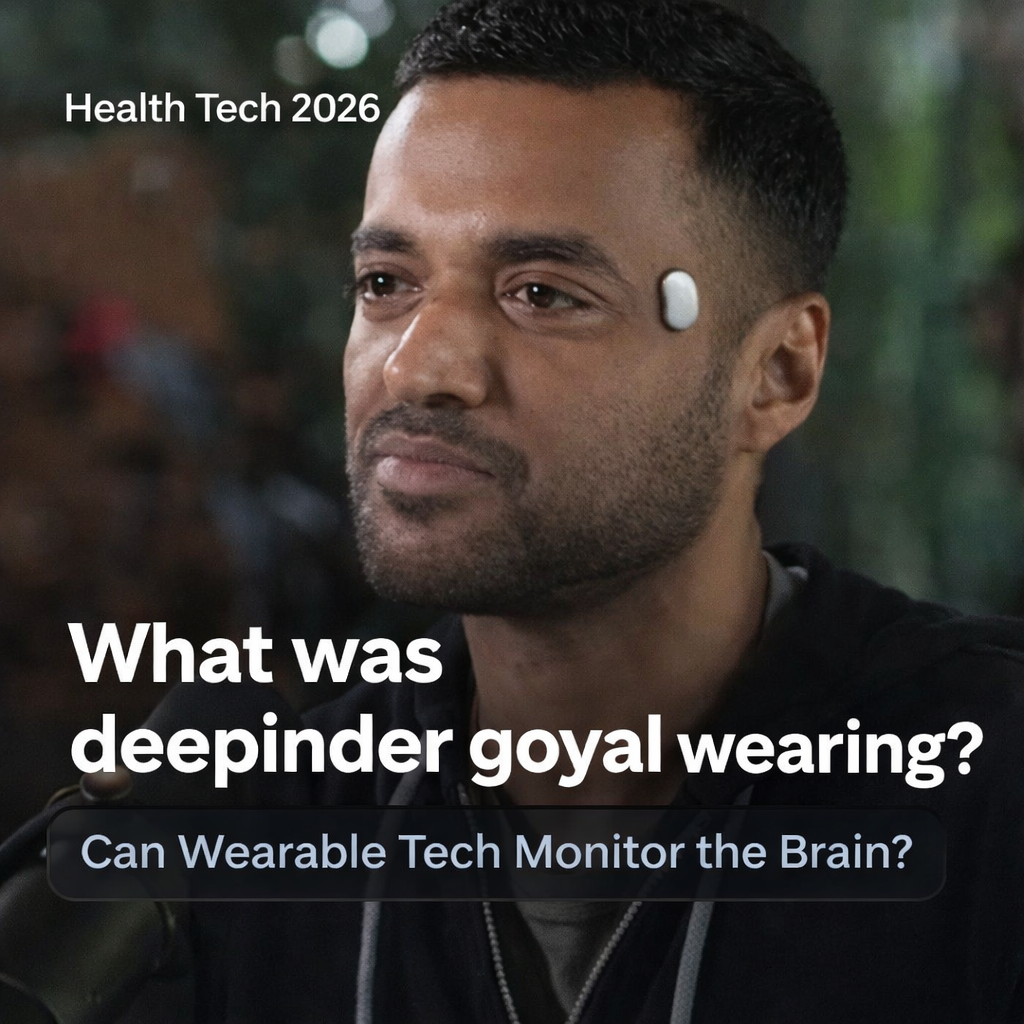
When Zomato founder and CEO Deepinder Goyal sat down for the popular Figuring Out podcast with Raj Shamani in early January 2026, one detail quickly caught more attention than his business insights: a small metallic wearable clipped near his temple (head). �
The Economic Times
Viewers didn’t just hear his conversation — they saw a tiny gadget on his head, sparking memes, online speculation, and widespread curiosity about what that device was and what it might be doing. �
The Times of India
In this blog, we break down the science, health innovation, controversy, and real-world implications of the device known as Temple — and what it might mean for personal brain health monitoring.
🧠 What Is the Temple Device?
The gadget Deepinder Goyal was wearing is called Temple — a research-grade wearable sensor designed to measure cerebral blood flow in real time. �
The Economic Times
Unlike typical wearables that track simple metrics like heart rate or steps, Temple aims to record patterns of blood circulation in the brain, which many scientists believe is linked to cognitive health, ageing, and neurological wellbeing. �
The Economic Times
Goyal shared that Temple is part of his personal health-tech research initiative under the venture Continue Research. It is not yet a consumer product and remains in an experimental phase, being tested by Goyal himself and his team. �
The Economic Times
🧪 The “Gravity Ageing Hypothesis” Behind Temple
What makes this device more than just a wearable is the scientific idea it was built around.
Deepinder Goyal has proposed the “Gravity Ageing Hypothesis,” which suggests that the force of gravity — acting on the upright human posture over decades — might subtly reduce blood flow to the brain, and that this reduced circulation could contribute to aspects of ageing. �
mint
This idea is novel: rather than linking ageing purely to genetics or cellular processes, this hypothesis places physical blood flow dynamics at the center of ageing and cognitive decline.
Whether or not this specific hypothesis stands up to scientific scrutiny, the concept of tracking cerebral blood flow as a health metric is already recognized in medical literature as important for understanding neurological health. �
The Economic Times
📍 How Temple Works (In Simple Terms)
Temple is a sensor-based wearable that sits near the temple region of the head and:
Continuously measures signals linked to blood flow in and around the brain
Aims to provide insights into patterns of cerebral circulation
Collects data in real time rather than via one-time lab scans
Traditionally, brain blood flow is measured using clinical tools like MRI or CT perfusion scans in hospital settings. Temple’s goal — if validated — would be to bring such measurements into a wearable, continuous, everyday context. �
The Economic Times
🩺 What Experts Are Saying
The reaction from scientists and medical professionals has been mixed, thoughtful, and cautious.
🧠 Supportive Curiosity
Some observers find the idea of continuous brain monitoring intriguing, and believe that more accessible ways to understand cerebral blood flow could be valuable for research into ageing, cognitive decline, and performance optimisation.
A startup founder even described Goyal’s Temple device as “wild and fascinating,” emphasizing its radical nature and potential if it works as intended. �
Hindustan Times
⚠️ Scientific Caution
However, experts also stress that:
Temple remains unproven in clinical terms
There is no robust peer-reviewed evidence yet validating its claims
Cerebral blood flow is complex and traditionally measured through medically validated techniques like MRI and specialized imaging
Tying gravity directly to ageing is still far from established science �
The Times of India +1
An AIIMS doctor questioned the scientific foundation of the device, noting that it lacks the rigorous clinical validation required before it could be recommended as a health tool. �
The Times of India
Neurologists have explained that while cerebral circulation is an important biomarker for brain health, wearable sensors typically capture surface-level signals and cannot yet replace medical imaging techniques that assess blood flow more directly. �
www.ndtv.com
📈 Could This Be the Future of Personal Brain Health?
Even though Temple is experimental and unproven, its emergence points to a broader trend in health technology:
• A shift from reactive clinical testing
toward
continuous, real-world monitoring
• From single-point health assessments
toward
longitudinal data trends that could detect early changes
• From general wellness tracking
to
more medically relevant, physiology-based metrics
Brain blood flow is already considered important in the study of dementia, cognitive decline, stroke risk, and even age-related changes in mental performance. A wearable that reliably tracks such data could, in theory, offer early warning signs before major clinical symptoms develop.
But that future depends on scientific validation, clinical trials, and rigorous testing — not just viral podcast curiosity.
💭 Balancing Innovation and Evidence
Temple embodies both the promise and pitfalls of emerging health tech:
Promise: a glimpse into a future where wearable devices go beyond steps and sleep, and into brain physiology
Pitfall: the current lack of clinical proof, and the risk of overselling unvalidated claims to the public
For healthcare professionals and consumers alike, it’s important to approach such innovations with open curiosity but healthy scepticism.
🧠 Key Takeaways for Health-Conscious Readers
✔ Brain blood flow is an important marker in neurological health
✔ Wearable sensing tech is advancing rapidly
✔ Experimental tools like Temple spark debate but are not medical devices yet
✔ Scientific proof and peer-reviewed evidence remain essential for clinical adoption
🌟 Final Thought
Deepinder Goyal’s Temple device — whether it becomes a meaningful health tool or a side project that fades — has already succeeded in one way:
It has started a conversation about a field many people barely think about — continuous brain health monitoring.
That alone raises awareness of how complex and fascinating our bodies are — and how technology might one day help us understand them better.