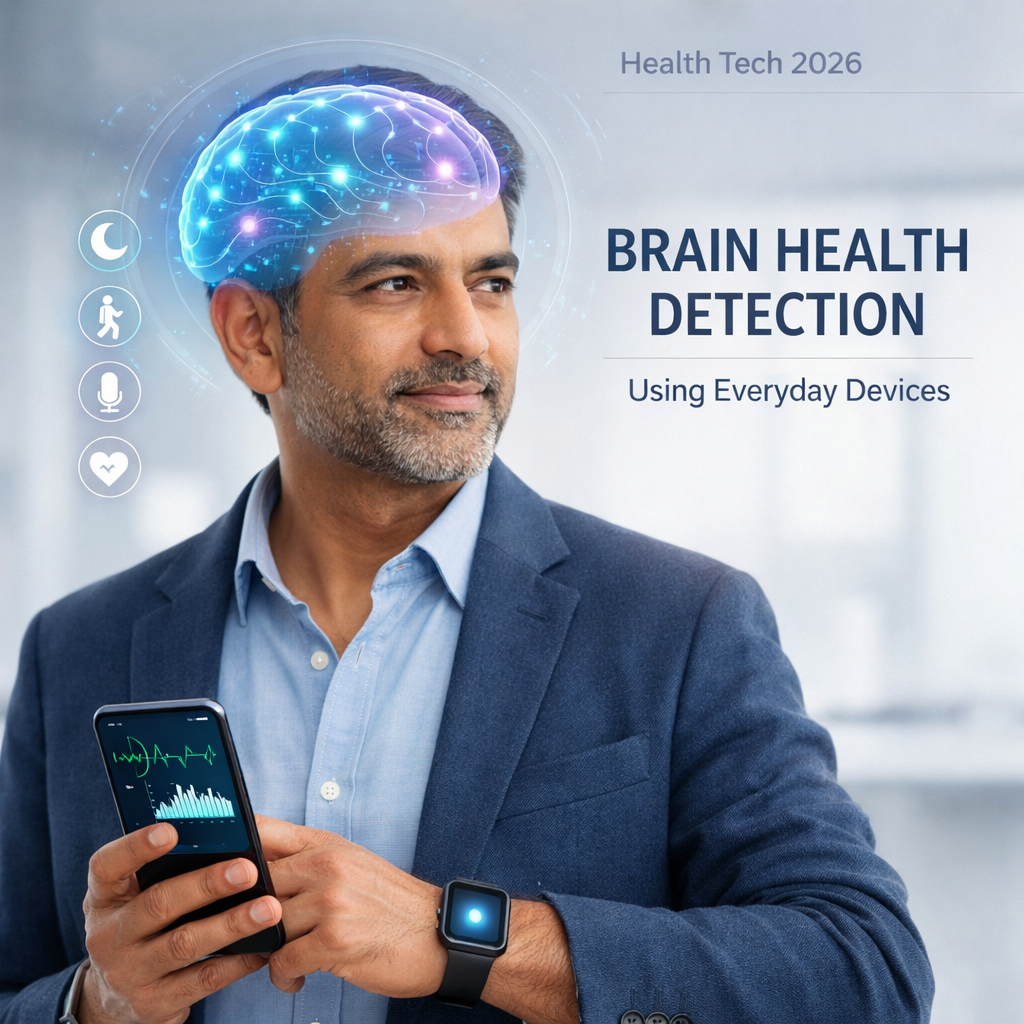
For decades, brain health was something doctors evaluated only after symptoms appeared — memory loss, confusion, imbalance, or noticeable cognitive decline. By then, intervention options were often limited.
That is now changing.
At CES 2026, global technology leaders showcased a new generation of health features that quietly monitor brain health signals using everyday devices — smartphones, smartwatches, earbuds, and home wearables. Companies like Samsung and other digital health innovators are pushing a future where early brain changes may be detected years before major symptoms appear.
This marks a major shift from reactive care to preventive brain health monitoring.
🧠 Why Early Brain Health Detection Matters
Cognitive decline, neurological stress, and early dementia do not begin suddenly. Research shows that subtle changes occur years in advance, including:
altered sleep patterns
changes in walking speed or balance
voice and speech variation
slowed reaction times
increased fatigue and mental fog
Traditionally, these signs were dismissed as stress, aging, or lifestyle issues. But new health-tech tools are learning to recognize patterns humans miss.
By identifying these changes early, doctors can:
guide lifestyle corrections
manage risk factors
slow progression
improve long-term quality of life
📱 How Everyday Devices Are Becoming Brain Health Sensors
Modern devices already collect vast amounts of physiological data. In 2026, the difference is how intelligently that data is interpreted.
1. Voice Pattern Analysis
AI models can now analyze:
speech rhythm
pauses
pitch changes
pronunciation consistency
Subtle alterations in speech patterns may indicate early neurological stress or cognitive load.
This technology runs quietly in the background during calls or voice interactions — no extra tests required.
2. Gait and Movement Tracking
Smartphones and wearables already measure steps. New systems analyze:
walking speed
stride consistency
balance variation
micro-instability
Changes in gait are increasingly recognized as early indicators of neurological and cognitive issues, long before noticeable memory problems appear.
3. Sleep Architecture Monitoring
Sleep is deeply connected to brain health.
Wearables now go beyond sleep duration and track:
sleep cycles
deep sleep quality
REM disruption
night-time restlessness
Research shows disrupted sleep patterns are strongly associated with early cognitive decline and neuroinflammation.
4. Reaction Time & Cognitive Load
Phones and watches can assess:
response speed
attention span
task switching efficiency
Small delays or inconsistencies can signal mental fatigue or neurological stress.
🧬 What CES 2026 Revealed
At CES 2026, Samsung and other tech companies highlighted brain-health initiatives that integrate:
AI-based pattern recognition
long-term data tracking
personalized baselines
preventive alerts
Rather than diagnosing disease, these systems aim to flag deviations from an individual’s normal cognitive behavior.
This approach is crucial because:
Brain health decline is personal — not everyone declines the same way or at the same pace.
Source:
– TechRadar coverage on CES 2026 brain-health features
– CES 2026 Health Technology Announcements
⚠️ What This Means for Everyday People
This technology is not meant to replace doctors. Instead, it acts as an early warning system.
Potential benefits include:
earlier lifestyle intervention
reduced anxiety through monitoring
better informed medical consultations
improved long-term brain resilience
For working professionals, seniors, and even younger adults under chronic stress, this could be transformative.
🧠 The Link Between Brain Health, Pain, and the Nervous System
Brain health is not isolated from the rest of the body.
Emerging research shows strong connections between:
chronic stress and pain sensitivity
poor sleep and neurological fatigue
nervous system overload and musculoskeletal pain
A stressed or fatigued brain can:
amplify pain signals
reduce recovery
impair posture and movement control
This is why modern pain management increasingly considers neuro-musculoskeletal health as one system, not separate parts.
🔍 Limitations and Ethical Considerations
While promising, this technology comes with important considerations:
data privacy
over-interpretation of signals
false positives
anxiety caused by constant monitoring
Experts emphasize that human clinical evaluation remains essential. Tech should guide awareness — not replace diagnosis.
🧭 What to Expect Next in 2026 and Beyond
Looking ahead, experts predict:
wider integration of brain-health dashboards
collaboration between tech companies and healthcare providers
personalized preventive health plans
early screening becoming routine, not reactive
Brain health monitoring may soon be as normal as checking heart rate or step count.
🏥 How This Connects to Preventive Care at Dr. Sudhir’s Pain Relief Clinic
At Dr. Sudhir’s Pain Relief Clinic, the focus is on early detection, nervous system balance, posture, movement quality, and long-term well-being.
As health technology evolves, it complements clinical care by:
improving awareness
supporting early intervention
encouraging proactive health behavior
Technology may alert you — but human expertise helps you act correctly.
🌟 Final Thought
The future of health care is not just about treating illness — it’s about recognizing change before damage occurs.
Brain health detection through everyday devices marks a powerful step toward preventive, personalized, and proactive care.
In 2026, your phone or watch may not diagnose disease — but it may help you protect your mind before it’s compromised.
📞 Concerned About Brain, Stress, or Pain-Related Symptoms?
Call our specialists at +91 91636 95790