
Sleep is not just rest.
It is the body’s most powerful healing process.
While you sleep, your brain and body move through different stages — each with a specific repair job. When any stage is disturbed, healing becomes incomplete, even if you spend enough hours in bed.
Understanding these sleep stages helps explain why:
you wake up tired after a full night’s sleep
pain feels worse after poor sleep
stress builds up silently
recovery feels slow
The 3 Main Stages of Sleep (In Simple Terms)
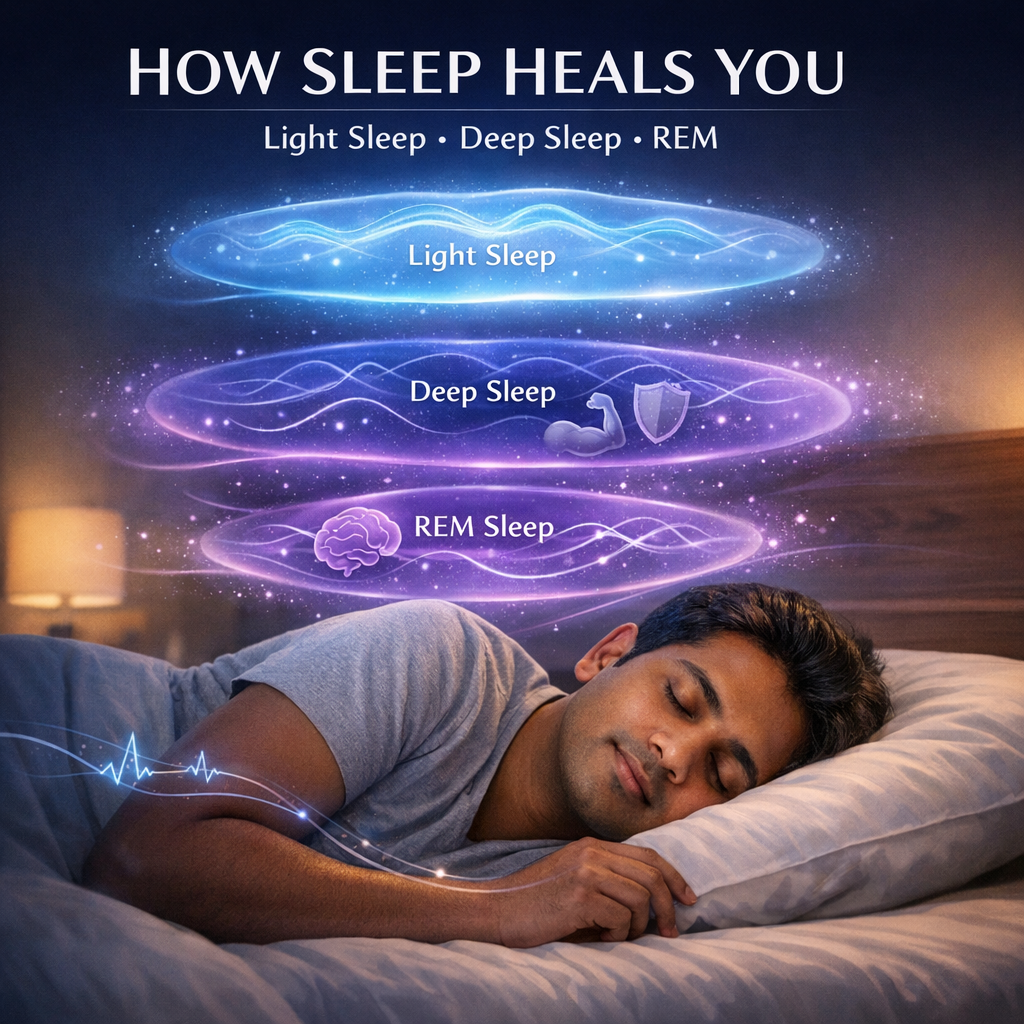
Every night, your body cycles through three key stages multiple times:
Light Sleep
Deep Sleep
REM Sleep
Each one heals a different part of you.
1️⃣ Light Sleep — The Transition Phase
Light sleep is where sleep begins.
What Happens Here:
heart rate slows
muscles start relaxing
body temperature drops
brain activity begins to quiet down
This stage prepares your body to go deeper.
Why Light Sleep Matters:
helps the body disengage from stress
allows smooth transition into deep sleep
supports basic recovery
If light sleep is disturbed (frequent waking, phone use, noise), your body struggles to enter deeper healing stages.
2️⃣ Deep Sleep — Physical Healing & Repair
Deep sleep is the most important stage for body repair.
What Happens Here:
muscles repair and grow
tissues heal
immune system strengthens
growth hormone is released
inflammation reduces
This is when:
pain recovery happens
fatigue resets
the body repairs daily wear and tear
Why Deep Sleep Is Critical:
If deep sleep is poor, you may experience:
body aches
stiffness
low energy
slow recovery
weaker immunity
Deep sleep is often reduced by:
late nights
stress
alcohol
irregular sleep timing
3️⃣ REM Sleep — Brain, Memory & Emotional Healing
REM (Rapid Eye Movement) sleep focuses on the brain and nervous system.
What Happens Here:
memory processing
emotional regulation
learning consolidation
stress release
mental clarity improves
This is the stage where most dreaming happens.
Why REM Sleep Matters:
Poor REM sleep leads to:
irritability
anxiety
poor focus
emotional heaviness
increased pain sensitivity
Even if your body feels rested, poor REM sleep can leave your mind exhausted.
How Sleep Stages Work Together
Sleep is like a repair shift system:
light sleep sets the stage
deep sleep repairs the body
REM sleep heals the mind
Skipping or shortening any stage creates partial recovery.
That’s why:
More sleep hours don’t always mean better sleep quality.
Why Poor Sleep Makes Pain Worse
When sleep is disrupted:
inflammation increases
pain signals amplify
muscles stay tense
nervous system stays alert
This is why people with:
back pain
neck pain
joint pain
often report worse symptoms after bad sleep.
Sleep doesn’t just rest pain — it controls pain sensitivity.
Signs Your Sleep Is Not Healing You
Watch for:
waking up tired daily
body stiffness in the morning
frequent night awakenings
vivid dreams but mental fatigue
pain worsening after poor sleep
These indicate imbalance in sleep stages.
Simple Ways to Improve Healing Sleep
✔ Keep a Fixed Sleep Time
Consistency matters more than duration.
✔ Reduce Screen Exposure at Night
Screens disturb REM sleep and delay deep sleep.
✔ Create a Wind-Down Routine
Calm the nervous system before bed.
✔ Avoid Heavy Meals & Alcohol Late
They reduce deep sleep quality.
✔ Prioritise Comfort & Temperature
A relaxed body enters deep sleep faster.
Final Thought
Sleep is not passive.
It is active healing.
Light sleep calms you.
Deep sleep repairs you.
REM sleep restores your mind.
When sleep works properly, the body heals quietly — without effort, medication, or struggle.
If sleep is poor, no amount of rest during the day can replace what night-time healing provides.
Protect your sleep — because it protects everything else.