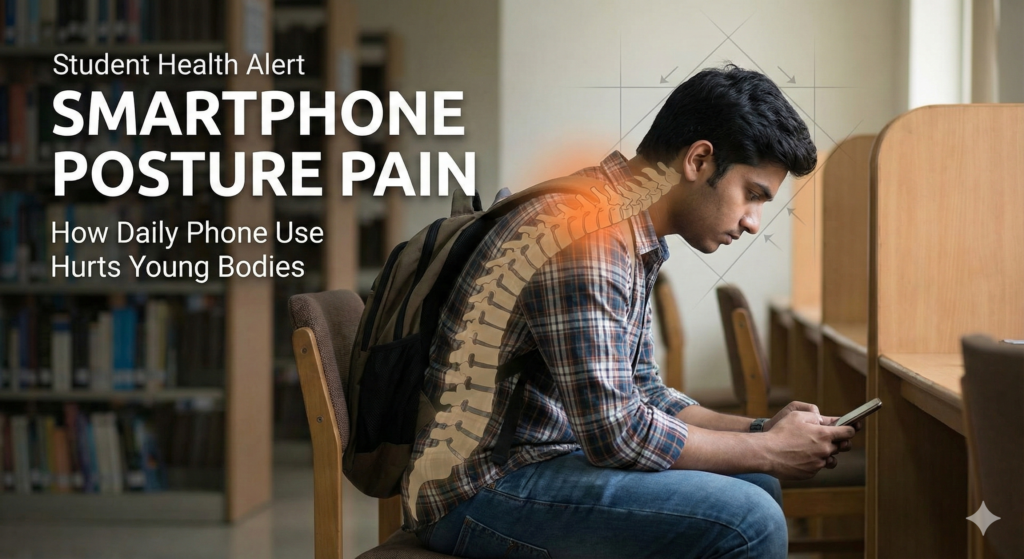
Smartphones have become an essential part of student life. From online classes and assignments to social media, gaming, and entertainment, students today spend several hours a day looking down at screens.
What often goes unnoticed is that this constant smartphone use is silently changing young bodies — and not in a good way.
Across clinics and research studies in 2025, doctors are reporting a sharp rise in neck pain, back pain, shoulder stiffness, and wrist discomfort among students, many of whom have no history of injury or physical illness.
This is not a coincidence.
It is a musculoskeletal consequence of modern digital habits.
📱 Smartphone Use in Students: A Growing Health Concern
Recent studies have shown a strong association between excessive smartphone usage and musculoskeletal pain, especially among students and young adults.
Unlike older generations, students today:
start using smartphones at a very young age
spend long uninterrupted hours on screens
combine phone use with poor sitting and lying postures
rarely take posture or movement breaks
As a result, pain that was once seen mostly in adults is now appearing during teenage and college years.
🧠 How Smartphone Use Physically Affects the Body
Smartphones don’t just affect attention and sleep — they directly affect posture, muscle balance, and joint loading.
1. Forward Head Posture (Tech Neck)
When students look down at their phones, the head shifts forward.
This dramatically increases the load on the neck and upper spine.
Over time, this leads to:
neck pain and stiffness
shoulder tightness
headaches
upper back discomfort
What makes this dangerous is that the posture feels “normal” after repetition — even while damage accumulates.
2. Upper Back and Shoulder Strain
Prolonged phone use often causes:
rounded shoulders
collapsed upper back posture
reduced shoulder mobility
This creates muscle imbalance:
chest muscles tighten
upper back muscles weaken
The result is persistent shoulder and upper back pain, especially after long study sessions.
3. Lower Back Pain From Slouched Sitting
Many students use smartphones:
sitting on beds
slouching on chairs
lying in awkward positions
These postures reduce spinal support and overload the lower back.
Over time, students may experience:
dull lower back pain
stiffness after sitting
pain while standing up after rest
4. Wrist, Thumb, and Hand Pain
Excessive typing, scrolling, and gaming place repeated strain on:
thumb joints
wrist tendons
forearm muscles
Students often ignore early symptoms like:
tingling
mild wrist pain
thumb soreness
Left untreated, these can progress into chronic tendon irritation.
⚠️ Why Students Often Ignore Early Pain
One of the biggest risks is normalization of pain.
Many students believe:
pain is part of studying
discomfort is temporary
young age means fast recovery
Unfortunately, repeated stress without correction leads to:
muscle imbalance
nerve sensitivity
chronic pain patterns
By the time pain interferes with daily life, the condition has already progressed.
🧠 The Role of Stress and Academic Pressure
Smartphone use in students is often linked with:
academic stress
poor sleep
anxiety
reduced physical activity
Stress increases muscle tension and pain sensitivity.
Combined with poor posture, this creates a perfect environment for musculoskeletal pain.
This is why many students complain of pain:
during exams
late at night
after long screen sessions
🦴 Common Pain Complaints Seen in Students
At pain relief clinics, students commonly report:
neck pain and stiffness
upper back pain
headaches
lower back pain
shoulder tightness
wrist and thumb pain
These are not random complaints — they follow clear postural and usage patterns.
🛡️ How Students Can Protect Their Bodies
✔ Take Movement Breaks
Stand, stretch, or walk every 30–40 minutes.
✔ Raise the Screen
Bring the phone closer to eye level instead of bending the neck.
✔ Improve Sitting Posture
Sit with back support, feet flat, and shoulders relaxed.
✔ Reduce Continuous Usage
Avoid long uninterrupted phone sessions, especially before sleep.
✔ Strengthen Postural Muscles
Simple exercises for the neck, upper back, and core help counter screen strain.
🩺 When Professional Help Is Needed
Students should seek professional evaluation if they experience:
pain lasting more than a few weeks
increasing stiffness or discomfort
pain that affects sleep or concentration
tingling, numbness, or weakness
Early correction prevents long-term damage.
🏥 How Dr. Sudhir’s Pain Relief Clinic Helps Students
At Dr. Sudhir’s Pain Relief Clinic, treatment focuses on:
posture and movement assessment
muscle imbalance correction
pain relief therapy
ergonomic guidance
long-term prevention strategies
The goal is not just to relieve pain — but to protect young bodies from chronic issues later in life.
🌟 Final Thought
Smartphones are not going away.
But pain doesn’t have to be part of student life.
Awareness, posture correction, and early care can make a huge difference — ensuring that today’s students don’t carry digital-age pain into adulthood.
📞 Need Help for Student-Related Pain?
Call our specialists at +91 91636 95790