
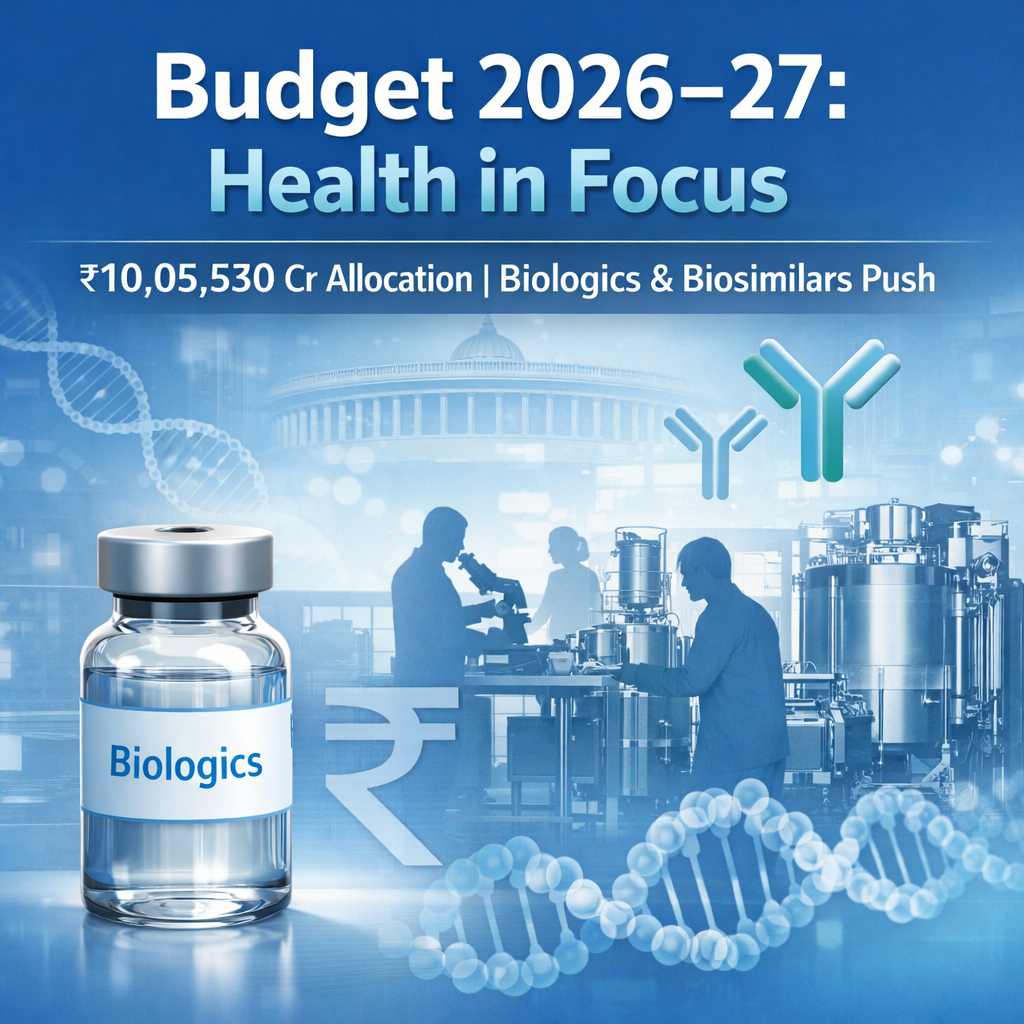
India’s Union Budget for 2026–27 has placed healthcare firmly in focus, with a significant allocation of ₹10,05,530 crore. One of the key objectives behind this investment is to strengthen domestic manufacturing of biologics and biosimilars — advanced medicines that are increasingly central to modern treatment.
But beyond the headline number, an important question remains:
What does this actually mean for patients, affordability, and access to care?
Why This Health Allocation Matters
A healthcare allocation of this scale signals recognition of a growing reality:
India’s disease burden is changing
Chronic illnesses, cancer, autoimmune disorders, and metabolic diseases are rising
Treatment today is more complex — and more expensive
By increasing health spending, the government aims to support both innovation and self-reliance, especially in high-value medicines.
Focus on Biologics and Biosimilars: Explained Simply
What Are Biologics?
Biologics are medicines made from living cells rather than chemicals. They are used in:
cancer treatment
autoimmune diseases
inflammatory disorders
certain neurological and rare conditions
They are highly effective — but often very expensive.
What Are Biosimilars?
Biosimilars are safe, regulated alternatives to original biologic drugs, similar to how generic medicines work — but far more complex to manufacture.
Expanding biosimilar production can:
reduce dependence on imported drugs
lower treatment costs over time
improve availability for Indian patients
This makes the budget’s manufacturing push particularly significant.
What This Could Mean for Patients
If implemented effectively, this policy direction could lead to:
Better access to advanced therapies
Lower long-term costs for treatments like cancer and autoimmune diseases
Improved availability of critical medicines within India
Stronger supply chains and fewer shortages
However, these benefits are not immediate. Biologics manufacturing requires time, strict regulation, and quality oversight.
The Gap Between Policy and Patient Reality
While the focus on advanced drug manufacturing is encouraging, some concerns remain:
Will cost savings reach patients directly?
Will public hospitals gain wider access to these medicines?
Will preventive care and early diagnosis see similar investment?
Healthcare outcomes improve most when treatment, prevention, and access grow together.
Why Manufacturing Alone Is Not Enough
Medicines are only one part of healthcare.
Patients also need:
early screening
affordable diagnostics
trained healthcare professionals
accessible clinics and hospitals
Without strengthening these areas, even the best medicines may remain under-utilised or out of reach.
A Step Forward — With Work Still Ahead
The 2026–27 Budget reflects a shift toward:
advanced medicine production
healthcare self-reliance
long-term capacity building
These are important foundations. The real test will lie in execution, regulation, and patient-centric delivery.
Final Thought
A ₹10,05,530 crore health allocation is a strong statement of intent.
If paired with:
affordability measures
preventive healthcare investment
wider public access
it has the potential to reshape India’s healthcare landscape in the years ahead.
For patients, hope lies not just in bigger numbers — but in how effectively those resources translate into earlier care, affordable treatment, and better outcomes.