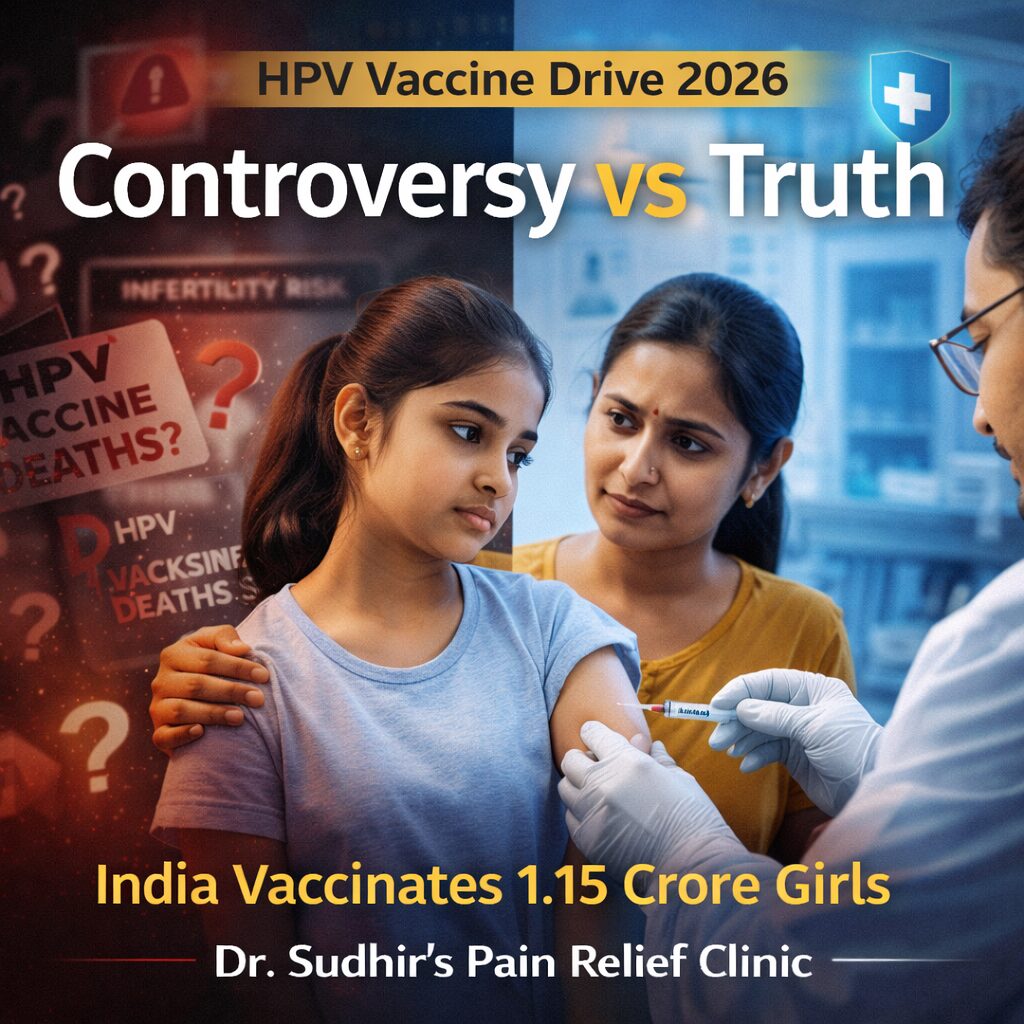
On February 28, 2026, India launched one of its largest preventive health initiatives: a nationwide free HPV vaccination programme for adolescent girls. The campaign aims to vaccinate around 1.15 crore (11.5 million) girls aged 14 every year to protect them from cervical cancer. �
Press Information Bureau +1
While the programme has been widely praised as a major public-health step, it has also sparked debates and misinformation online. Understanding both the controversy and the scientific facts is important.
What the HPV Vaccination Drive Is About
The programme targets 14-year-old girls across India, with the vaccine provided free at government health facilities. �
Press Information Bureau
Key points about the initiative:
Around 1.15 crore girls will be vaccinated annually. �
www.ndtv.com
The vaccine used is Gardasil-4, which protects against several HPV strains linked to cervical cancer. �
www.ndtv.com
Vaccination is voluntary and requires parental consent. �
www.ndtv.com
India joins over 160 countries that include HPV vaccination in national immunisation programmes. �
Press Information Bureau
The campaign is aimed at reducing cervical cancer, which causes over 1.2 lakh cases and around 80,000 deaths in India each year. �
www.ndtv.com
Why the Vaccine Matters
Human Papillomavirus (HPV) is a common infection transmitted through skin-to-skin contact. Certain strains of HPV, especially types 16 and 18, are responsible for the majority of cervical cancer cases. �
www.ndtv.com
Vaccination before exposure to the virus can dramatically reduce the risk of cervical cancer later in life. �
www.ndtv.com
Studies from several countries show that HPV vaccination significantly reduces cervical cancer risk in vaccinated populations. �
www.ndtv.com
The Controversy Around the HPV Vaccine
Despite strong scientific support, the campaign has generated debate and concern in some sections of society.
1. Social Media Misinformation
Online posts have claimed the vaccine may cause:
infertility
severe side effects
long-term health problems
However, health experts say many of these claims are misleading or unsupported by scientific evidence. �
India Today
2. Concerns From Earlier Trials
Some activists refer to a 2009 HPV vaccine study controversy in India involving tribal girls, where deaths were reported during a trial.
Investigations later found no evidence that the vaccine caused those deaths, but the episode created lasting suspicion among some groups. �
The News Minute
3. Policy Debate
Some public-health experts have raised questions about whether vaccination alone is enough.
They argue that cervical cancer prevention should also include:
regular screening
awareness programs
improved access to healthcare
These debates are about policy priorities, not necessarily the safety of the vaccine.
What Scientists and Health Experts Say
Most medical organisations and global health agencies consider HPV vaccination safe and effective.
Key facts:
The vaccine has been used in many countries for over 15 years.
It targets the HPV strains responsible for most cervical cancer cases.
Serious side effects are extremely rare.
Experts emphasise that misinformation could discourage families from using a powerful cancer-prevention tool. �
India Today
The Bigger Picture
Cervical cancer remains one of the most preventable cancers, yet it still affects thousands of women in India every year.
Public health experts say the best strategy includes:
vaccination
screening programs
awareness and education
early treatment
The HPV vaccination drive is designed to strengthen the prevention part of this strategy.
Final Thought
The nationwide HPV vaccination programme represents a major step in India’s effort to reduce cervical cancer. While debates and concerns exist, most scientific evidence supports the vaccine’s effectiveness and safety.
For families, the key is to rely on verified medical information rather than rumours or misinformation.
Understanding the facts helps ensure that important public-health initiatives achieve their goal: protecting future generations from preventable disease.