
Early detection is one of the most important factors in successfully treating cancer. When tumors are discovered in their early stages, treatment options are more effective and survival rates improve significantly. Scientists around the world are constantly searching for new ways to identify cancer sooner and more accurately.
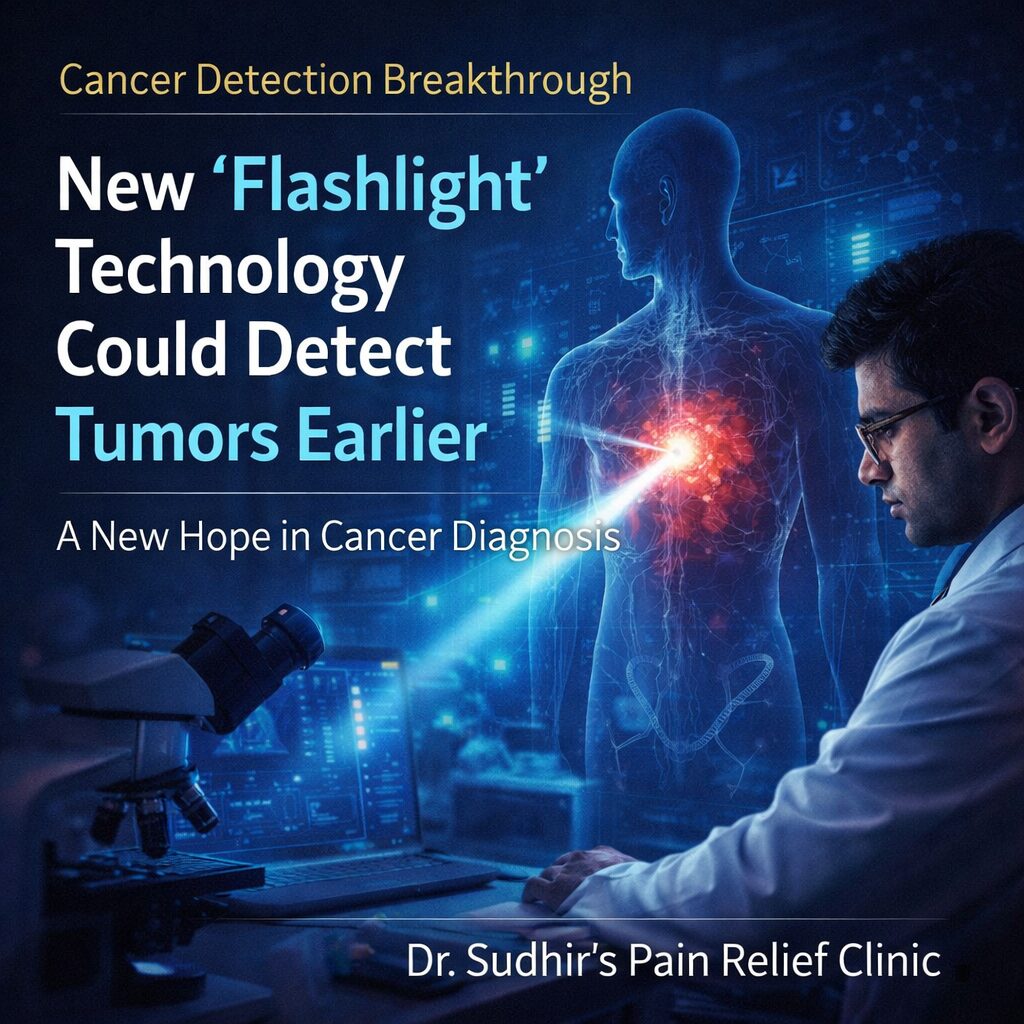
A recent scientific breakthrough has introduced a promising concept often described as a “flashlight” technology for tumors. This innovative approach could help doctors locate cancer cells more precisely inside the body, potentially transforming how cancers are detected and treated.
The Challenge of Detecting Tumors Early
One of the biggest difficulties in cancer care is identifying tumors when they are still small. Many cancers develop quietly and do not cause noticeable symptoms until they reach more advanced stages.
Traditional diagnostic methods include:
imaging tests such as CT scans and MRI
biopsies to examine suspicious tissue
blood tests for certain cancer markers
While these tools are extremely valuable, they sometimes struggle to detect very small tumors or hidden cancer cells.
This is where new technologies are beginning to make a difference.
What Is the “Flashlight” Technology?
The new technology works by using special molecular markers or probes that attach to cancer cells. Once attached, these probes emit signals that allow doctors to “see” tumors more clearly during medical imaging.
Scientists often compare the technique to shining a flashlight inside the body.
Instead of searching blindly for abnormal tissue, doctors can use these targeted probes to illuminate cancer cells, making them easier to detect.
The result is a much clearer view of where tumors are located.
How the Technology Works
The process generally involves three key steps:
Targeting Cancer Cells
Scientists design molecules that specifically attach to proteins found on tumor cells.
Illuminating the Tumor
These molecules carry special markers that glow or produce signals when scanned with medical imaging devices.
Improved Visualization
When doctors perform imaging scans, the cancer cells appear highlighted, helping them locate tumors with greater precision.
This approach can make it easier to identify very small or early-stage cancers that might otherwise be difficult to detect.
Why This Breakthrough Matters
The development of tumor “flashlight” technology could have several important benefits for cancer care.
1. Earlier Detection
By illuminating cancer cells, doctors may be able to identify tumors much earlier than before. Early detection greatly improves treatment outcomes.
2. More Accurate Diagnosis
Targeted imaging can help distinguish cancerous tissue from healthy tissue, reducing uncertainty during diagnosis.
3. Better Surgical Precision
Surgeons could potentially use this technology during operations to clearly see tumor boundaries, helping them remove cancer while preserving healthy tissue.
4. Improved Monitoring
Doctors may also use these imaging tools to monitor how well treatments are working and detect any recurrence of cancer.
The Future of Cancer Detection
This research represents part of a larger movement toward precision medicine, where medical treatments and diagnostics are tailored to the biology of each patient and each disease.
Scientists are exploring similar technologies that combine:
advanced imaging techniques
artificial intelligence
molecular biology
targeted probes
Together, these tools could dramatically improve how diseases like cancer are detected and treated.
What Patients Should Know
While this technology is still being studied and refined, it highlights how quickly cancer research is advancing. Breakthroughs like this bring hope for a future where cancers can be detected earlier, treated more effectively, and monitored more accurately.
However, even with new technologies, regular health checkups and awareness of symptoms remain essential. Early screening and medical consultation continue to play a crucial role in improving cancer outcomes.
Final Thought
Innovations such as tumor “flashlight” technology show how modern science is transforming the fight against cancer. By helping doctors see tumors more clearly and earlier than ever before, these advancements could significantly improve diagnosis, treatment, and survival.
As research continues, the goal remains clear: to detect cancer sooner and give patients the best possible chance at recovery.