
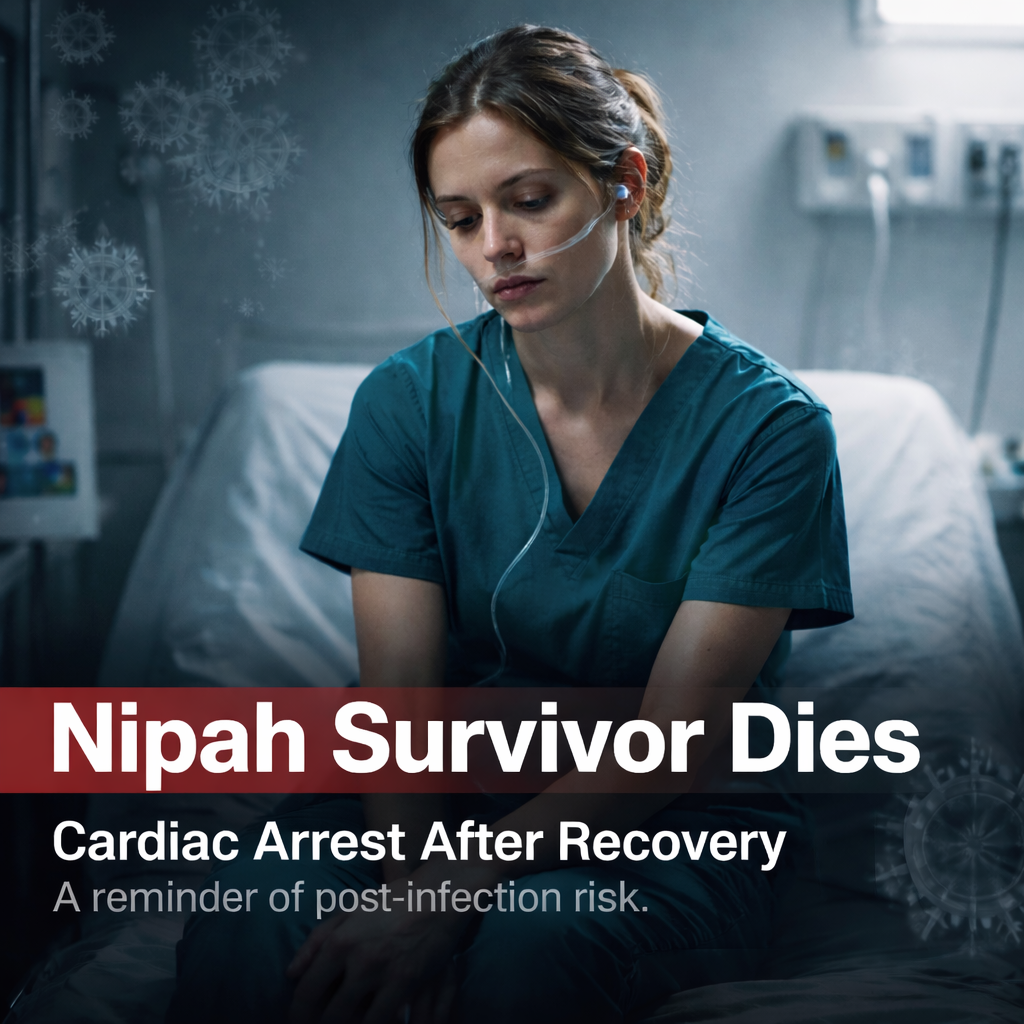
A recent incident in West Bengal has drawn national attention to the seriousness of viral infections and their long-term effects. A young nurse who had previously recovered from a Nipah virus infection died of cardiac arrest after weeks of critical illness, raising concerns about post-infection complications and the risks faced by frontline healthcare workers.
This case is not just a piece of news. It is a reminder of how severe infections can leave lasting impacts on the body—even after the virus is no longer detected.
What Happened in West Bengal
According to multiple reports, a 25-year-old nurse in North 24 Parganas, West Bengal, who had earlier tested positive for the Nipah virus, died of cardiac arrest at a private hospital. �
www.ndtv.com +1
She had been critically ill and required ventilator support for several weeks. �
www.ndtv.com
After showing some improvement, she was taken off the ventilator in late January. �
ETHealthworld.com
Despite testing negative for the virus, her health remained fragile. �
The Times of India
She had suffered a prolonged coma, weakened immunity, and developed a lung infection. �
ETHealthworld.com +1
She eventually died due to cardiac arrest linked to complications, not an active Nipah infection. �
Business Today
Health authorities confirmed that contact tracing was carried out and no wider outbreak linked to this case was detected.
Understanding Nipah Virus
Nipah virus is a rare but highly dangerous zoonotic infection transmitted from animals—especially fruit bats—to humans. It can also spread through close human contact in certain conditions.
Common symptoms
fever
headache
muscle pain
fatigue
Severe complications
respiratory distress
brain inflammation (encephalitis)
confusion or seizures
coma
The virus has a high fatality rate, sometimes reaching 50–75% in severe outbreaks. �
Medindia
Currently:
there is no specific antiviral treatment
there is no widely available vaccine
treatment is mainly supportive care
Why Did Complications Occur After Recovery?
In this case, doctors indicated that the nurse did not die from an active infection. Instead, her death was linked to complications that developed after the critical illness phase.
Severe viral infections can cause:
1. Immune System Weakening
Long hospital stays, ventilator support, and comas can:
suppress immunity
increase vulnerability to secondary infections
2. Secondary Lung Infections
Patients in intensive care often develop:
hospital-acquired infections
pneumonia
respiratory complications
These can place additional stress on the heart and body.
3. Organ Stress After Critical Illness
Severe infections can:
strain the heart
affect the nervous system
disrupt normal body functions
Even after the virus clears, the body may still be recovering from extreme physiological stress.
A Reminder of Risks Faced by Healthcare Workers
This case also highlights the dangers faced by frontline medical staff.
Healthcare workers are often:
the first to encounter infected patients
exposed to high viral loads
working long hours under stressful conditions
In this incident:
two healthcare workers were infected
one recovered and was discharged
the young nurse eventually died due to complications �
Medical Dialogues
It serves as a reminder of the importance of:
protective equipment
infection control protocols
early isolation measures
What the Public Should Understand
Despite the seriousness of the case, health officials have clarified:
There is no evidence of a widespread outbreak linked to this incident.
Nearly 200 contacts were traced and tested negative. �
Medindia
The death was due to post-infection complications, not active viral spread. �
Business Today
This means:
there is no immediate cause for panic
but awareness and precautions remain essential
How to Reduce the Risk of Nipah Infection
Health authorities recommend simple preventive steps, especially in affected regions:
avoid consuming raw date palm sap
wash fruits thoroughly
avoid fruits partially eaten by animals
maintain hand hygiene
avoid close contact with infected individuals
seek medical care for high fever with confusion or breathing difficulty
These precautions significantly reduce the risk of infection.
The Larger Lesson: Recovery Doesn’t Always Mean the End of Risk
One of the most important takeaways from this case is that recovery from a severe infection is often a long process.
Even after the virus is gone, patients may face:
weakened immunity
organ stress
secondary infections
long-term complications
This is why:
follow-up care is essential
monitoring after recovery matters
early rehabilitation can improve outcomes
Final Thought
The death of a young nurse after surviving the Nipah virus is a tragic reminder of the hidden dangers of severe infections.
It shows that:
viruses can leave lasting damage
frontline workers face real risks
recovery is not always immediate
post-illness care is just as important as treatment
Awareness, prevention, and timely medical care remain the strongest defenses against such diseases.