
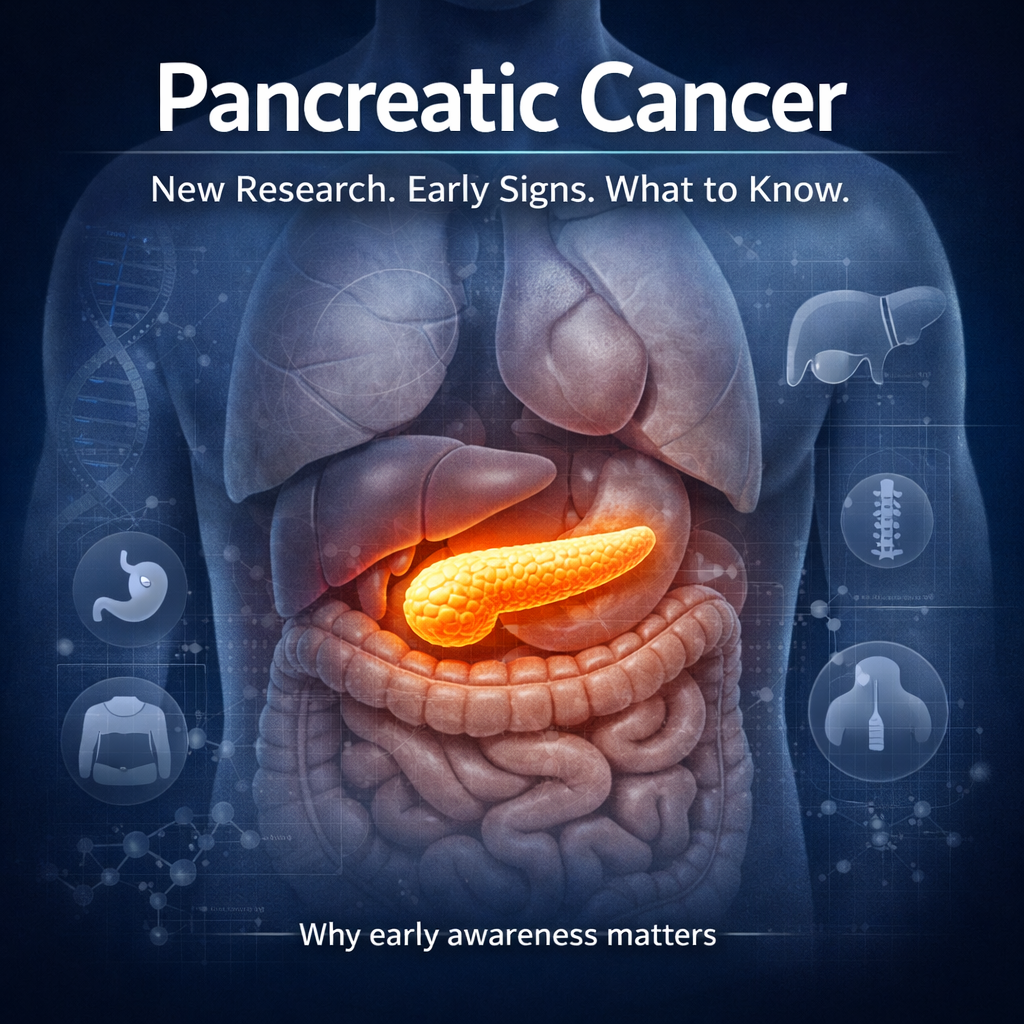
In recent years, pancreatic cancer — one of the deadliest yet least understood cancers — has become the focus of major scientific breakthroughs. Researchers are making progress in early detection, treatment approaches, and understanding the biology of the disease.
But public awareness about pancreatic cancer remains low, and many people don’t know how it starts or what symptoms to watch for.
This article explains what pancreatic cancer is, why it’s dangerous, and how to recognise early warning signs — so you’re informed and empowered.
What Is Pancreatic Cancer?
The pancreas is a deep-seated organ located behind the stomach. It has two main roles:
Digestive function – it produces enzymes to help break down food.
Hormone function – it produces insulin and other hormones that regulate blood sugar.
Pancreatic cancer occurs when cells in the pancreas begin to grow abnormally and form a tumour. Because the pancreas is hidden deep within the body, early tumours are often asymptomatic and difficult to detect. This is one major reason pancreatic cancer is frequently diagnosed at advanced stages.
Why Pancreatic Cancer Is So Serious
Several factors make pancreatic cancer particularly dangerous:
🔹 Late Detection
Symptoms often appear only in later stages, after the disease has spread.
🔹 Aggressive Growth
Pancreatic cancer cells tend to grow and invade surrounding tissues quickly.
🔹 Low Early Screening
There is currently no routine screening test recommended for the general population (unlike mammograms or colonoscopies).
🔹 Limited Early Symptoms
Early signs can be subtle and easily mistaken for digestive issues.
Major Research Milestone — What It Means
Recent scientific progress includes:
Improved understanding of genetic changes that lead to pancreatic cancer
Novel imaging techniques for better early detection
Biomarker research aimed at detecting cancer before symptoms appear
New drug targets based on the molecular profile of tumours
These milestones point toward a future where early detection and personalised treatment can improve survival rates. But until that future arrives, awareness remains one of the most important tools we have.
Common Symptoms to Watch For
While early pancreatic cancer may be silent, there are warning signs — especially when multiple symptoms appear together:
1. Unexplained Weight Loss
Sudden or unintentional weight loss without dieting can be an early clue.
2. Jaundice
Yellowing of the skin and eyes, dark urine, or light-coloured stools can indicate bile duct obstruction — often linked to pancreatic tumours.
3. Upper Abdominal Pain
Persistent pain in the upper abdomen that may radiate to the back.
4. Digestive Problems
loss of appetite
nausea
vomiting
unexplained indigestion
5. New-Onset Diabetes or Worsening Blood Sugar Control
The pancreas plays a major role in insulin production, so cancer may impact blood sugar.
6. Fatigue and Weakness
Feeling unusually tired despite adequate rest.
7. Blood Clots
Some people develop unexplained blood clots.
It’s important to note: these symptoms do not necessarily mean cancer, but they warrant evaluation — especially if they persist or occur in combination.
Who Is at Higher Risk?
Certain factors are associated with a higher likelihood of developing pancreatic cancer:
Family history of pancreatic cancer
Smoking
Chronic pancreatitis
Long-standing diabetes
Obesity
Age (risk increases after age 50)
Awareness of risk factors can help both patients and clinicians consider earlier evaluation when concerning symptoms appear.
Diagnosis: What to Expect
If pancreatic cancer is suspected, common diagnostic steps include:
Blood tests (including tumour markers like CA 19-9)
Ultrasound imaging
CT scan or MRI
Endoscopic ultrasound (EUS)
Biopsy
Early diagnosis remains a challenge, but advances in imaging and biomarkers are improving detection.
Treatment — Bespoke and Evolving
Treatment depends on the stage of the cancer and may include:
Surgery (when possible) to remove the tumour
Chemotherapy
Targeted therapy based on tumour genetics
Immunotherapy (in selected cases)
Supportive care to manage symptoms and improve quality of life
Recent research breakthroughs are opening the door to more personalised, less toxic treatments.
Prevention and Early Action
While there is no guaranteed way to prevent pancreatic cancer, certain measures can reduce risk:
✔ Avoid smoking
✔ Maintain a healthy weight
✔ Control diabetes effectively
✔ Follow a balanced diet
✔ Regular health check-ups, especially if you have risk factors
If you experience persisting unexplained symptoms (such as jaundice, abdominal pain, or sudden weight loss), seek medical evaluation sooner rather than later.
Final Thought
Pancreatic cancer is serious — but understanding it empowers you.
Major research milestones suggest that we may soon be able to detect and treat this disease earlier than ever before. Until then, recognising the early signs, knowing the risk factors, and seeking care promptly remain essential.
Being informed is the first step toward protection — for you and your loved ones.