Chronic pain is more than just discomfort—it can affect your daily routine, sleep, work, and overall quality of life. Many people rely on painkillers or temporary solutions, only to find that the pain keeps coming back.
The key to long-term relief lies in a structured, step-by-step recovery plan that focuses on the root cause of pain, not just the symptoms.
What Is Chronic Pain?
Chronic pain is any pain that lasts for more than 3 months. It can affect different parts of the body, including:
Back
Neck
Joints
Muscles
Nerves
Common causes include poor posture, injuries, lifestyle habits, and underlying medical conditions.
Why a Structured Recovery Plan Matters
Without a proper plan, pain often becomes recurring. A structured approach helps:
Identify the real cause of pain
Reduce inflammation safely
Restore movement and strength
Prevent future episodes
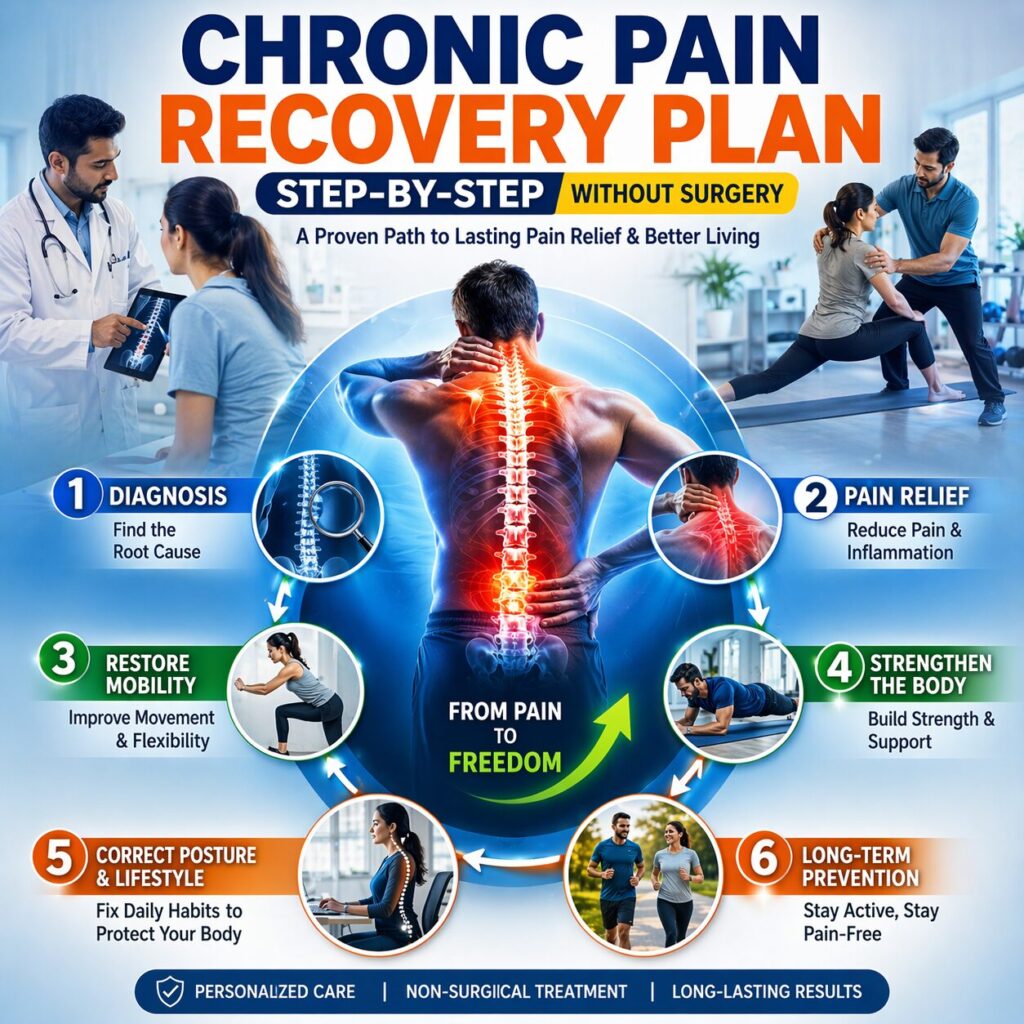
Step 1: Identify the Root Cause
The first and most important step is accurate diagnosis.
Pain may originate from:
Muscle imbalance
Nerve compression
Joint dysfunction
Postural problems
Treating the wrong cause leads to temporary relief and repeated pain.
Step 2: Control Pain and Inflammation
Before starting active treatment, it is important to reduce pain levels.
This may involve:
Non-invasive therapies
Targeted pain relief techniques
Controlled physical treatments
The goal is to make the body ready for recovery.
Step 3: Restore Mobility and Flexibility
Chronic pain often leads to stiffness and restricted movement.
This stage focuses on:
Improving joint mobility
Reducing stiffness
Restoring natural movement
Better mobility reduces stress on the body.
Step 4: Strengthen the Body
Weak muscles are a major cause of recurring pain.
Treatment includes:
Strengthening exercises
Core stability training
Muscle activation techniques
A strong body provides better support to the spine and joints.
Step 5: Correct Posture and Lifestyle
Daily habits play a huge role in chronic pain.
Patients are guided on:
Proper sitting and standing posture
Ergonomic adjustments
Safe movement techniques
Activity modifications
Correcting these habits prevents pain from returning.
Step 6: Long-Term Prevention
Recovery does not end when pain reduces.
Long-term success requires:
Regular exercises
Healthy lifestyle habits
Periodic monitoring
This ensures sustainable, pain-free living.
Why Most Treatments Fail
Many people depend only on:
Painkillers
Temporary rest
Home remedies
These approaches may reduce symptoms temporarily but do not address the root cause, leading to recurring pain.
How Dr. Sudhir’s Pain Relief Clinic Helps
At Dr. Sudhir’s Pain Relief Clinic, treatment is based on a scientifically designed, surgery-free protocol.
Key benefits:
Root-cause focused treatment
No long-term medication dependency
Non-invasive therapies
Personalized treatment plans
Long-lasting results
This approach helps patients:
Recover safely
Improve mobility
Avoid surgery
Return to normal life faster
Who Can Benefit from This Plan?
This recovery plan is effective for:
Chronic back pain
Neck pain
Sciatica
Joint pain
Postural pain
Sports injuries
Final Thoughts
Chronic pain does not have to be permanent. With the right approach, it is possible to recover without surgery or long-term medication.
A structured recovery plan that focuses on the root cause, movement, strength, and prevention is the key to lasting relief.
If you are dealing with ongoing pain, seeking the right guidance can help you take the first step toward recovery.