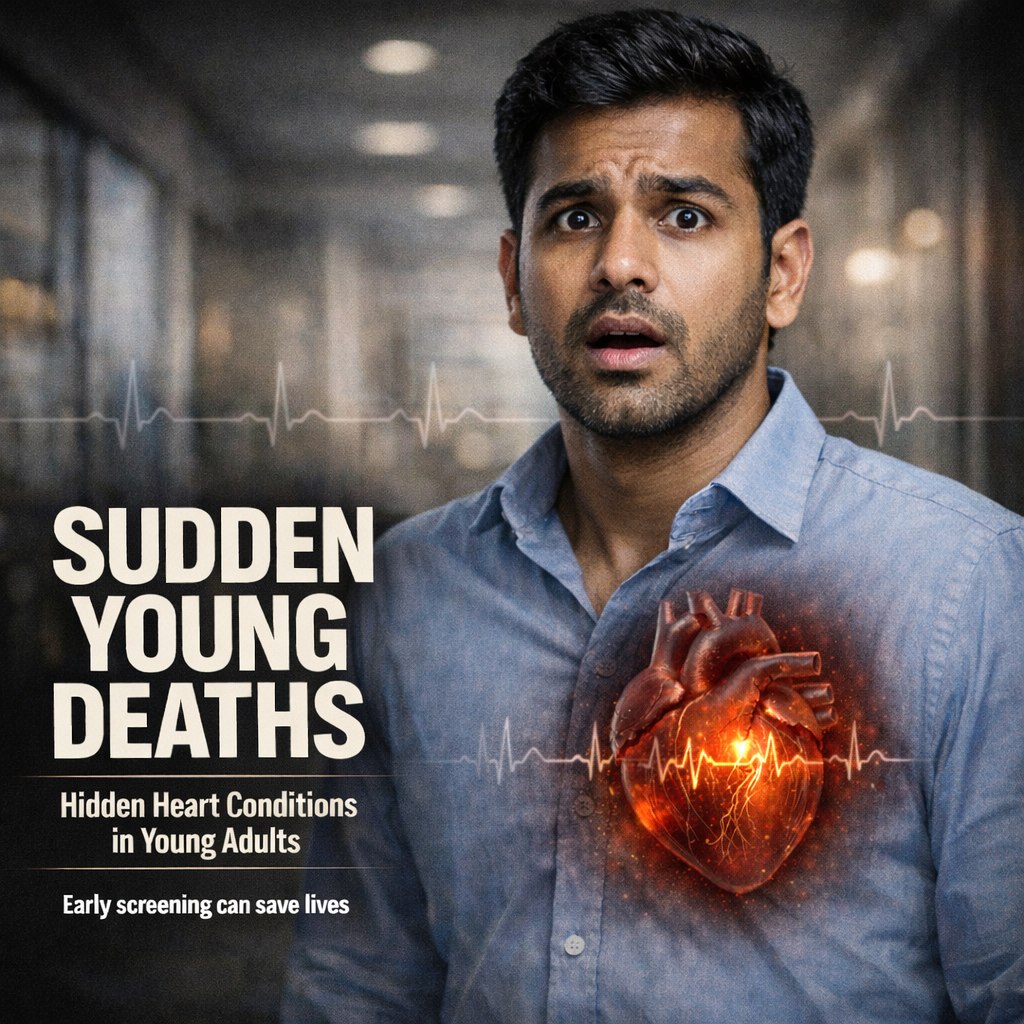
Sudden death in young adults — seemingly healthy people in the prime of their lives — is one of the most shocking and heartbreaking events a community can face. While these events are relatively rare, new evidence suggests that undiagnosed heart conditions are a major cause, and many of these cases could be preventable with better awareness and screening.
Unlike traditional heart disease in older adults, which often develops over decades, sudden cardiac deaths in younger people frequently stem from structural, genetic, or electrical problems in the heart that go unnoticed until it’s too late.
Heart Conditions Behind Sudden Death in the Young
Young sudden deaths are often caused by a group of silent or hidden cardiovascular conditions:
1. Hypertrophic Cardiomyopathy (HCM)
Hypertrophic cardiomyopathy is one of the most common causes of sudden cardiac death in people under 35. It is a genetic condition in which the heart muscle — especially the left ventricle — thickens abnormally. This can obstruct blood flow and disrupt the heart’s electrical system, leading to dangerous arrhythmias. Many individuals with HCM never experience symptoms before a sudden event, making it particularly insidious. �
The Times of India +1
2. Electrical Disorders and Arrhythmias
Conditions such as long QT syndrome, Brugada syndrome, and catecholaminergic polymorphic ventricular tachycardia (CPVT) affect the heart’s electrical pathways. These disorders can trigger sudden, life-threatening arrhythmias — sometimes during exercise or stress — even when the heart appears structurally normal. �
Mayo Clinic +1
3. Structural Heart Defects
Some people are born with congenital heart defects that may not cause symptoms until a sudden event occurs. These can include anomalies in the heart’s chambers, valves, or coronary arteries. �
Wikipedia
4. Other Cardiomyopathies
In addition to HCM, other forms of cardiomyopathy such as dilated or arrhythmogenic right ventricular cardiomyopathy can predispose young hearts to sudden failure, especially under stress or physical exertion. �
JOCMR
5. Premature Coronary Disease
While early coronary artery disease is more associated with older adults, Indian data suggest that premature coronary disease — blockage or atherosclerosis of coronary arteries — also contributes to sudden deaths in people under 45. �
Apollo 24|7
What the Data Shows
Recent research and clinical analyses paint a worrying picture:
In studies of sudden death in younger adults, structural abnormalities and unexplained deaths accounted for a significant portion of cases, with cardiomyopathies among the leading identifiable causes. �
PMC
Findings from Indian populations suggest that young adults under 40 are experiencing sudden cardiac deaths at a rising rate, although more systematic data collection is needed. �
Kauvery Hospitals Bangalore
Reports of healthy, active young people collapsing unexpectedly — including students and athletes — highlight how these conditions can remain silent until a catastrophic event occurs. �
Gulf News
In many of these cases, there were no obvious symptoms or warning signs before the event, underscoring the challenge of detecting risk without targeted screening. �
Medscape
Why These Conditions Often Go Undiagnosed
Several factors contribute to the silent nature of these heart risks:
1. Lack of Symptoms
Many inherited and structural heart conditions produce no clear symptoms until the moment of crisis. Fatigue or mild breathlessness may be dismissed as stress or lack of fitness.
2. Normal Routine Examinations Are Not Enough
Standard health checks — including basic physical exams — often miss subtle structural or electrical heart abnormalities. Specialized tests, such as echocardiograms, ECGs, and genetic screening, are necessary to identify risks.
3. Limited Awareness
Both within the public and among some healthcare providers, there is limited awareness that young adults can be at significant risk of sudden cardiac events. This gap contributes to missed opportunities for early detection and intervention.
Who Should Consider Heart Screening
While not every young adult needs advanced testing, certain individuals should be considered for more detailed evaluation:
Those with a family history of sudden cardiac death or known heart conditions
Young athletes before engaging in competitive sports
Individuals with unexplained fainting, chest pain, or shortness of breath
Anyone with known genetic heart disease in the family
Early screening with ECG, echocardiography, and, where appropriate, genetic testing can help identify those at risk long before a serious event.
Reducing the Risk: What Helps
1. Awareness and Education
Understanding that sudden heart events can occur in otherwise healthy young adults is the first step toward prevention.
2. Family History Assessment
A detailed family history can provide crucial clues about inherited risks.
3. Targeted Screening
Cardiac screening for high-risk individuals — especially young athletes — may detect dangerous conditions early.
4. Lifestyle Optimisation
Maintaining heart-healthy habits — balanced nutrition, regular exercise, stress management, and avoiding smoking or excessive substances — supports overall cardiac health, though it cannot prevent every genetic condition.
5. Specialist Evaluation
Consult a cardiologist if you have concerns about symptoms or family risk factors. Early specialist evaluation can guide decisions about monitoring and preventive strategies.
Final Thought
Sudden deaths in young adults due to heart conditions are tragic — but they are not always unavoidable. Understanding the silent mechanisms behind hidden heart disease, recognizing risk factors, and taking proactive steps toward early detection and awareness can significantly reduce the likelihood of such events.
If you or a loved one has risk factors — especially a family history or unexplained symptoms — early cardiac evaluation and screening could be life-saving.