Most people think about the spine only when it hurts.
But by the time pain appears, the spine has usually been under stress for years.
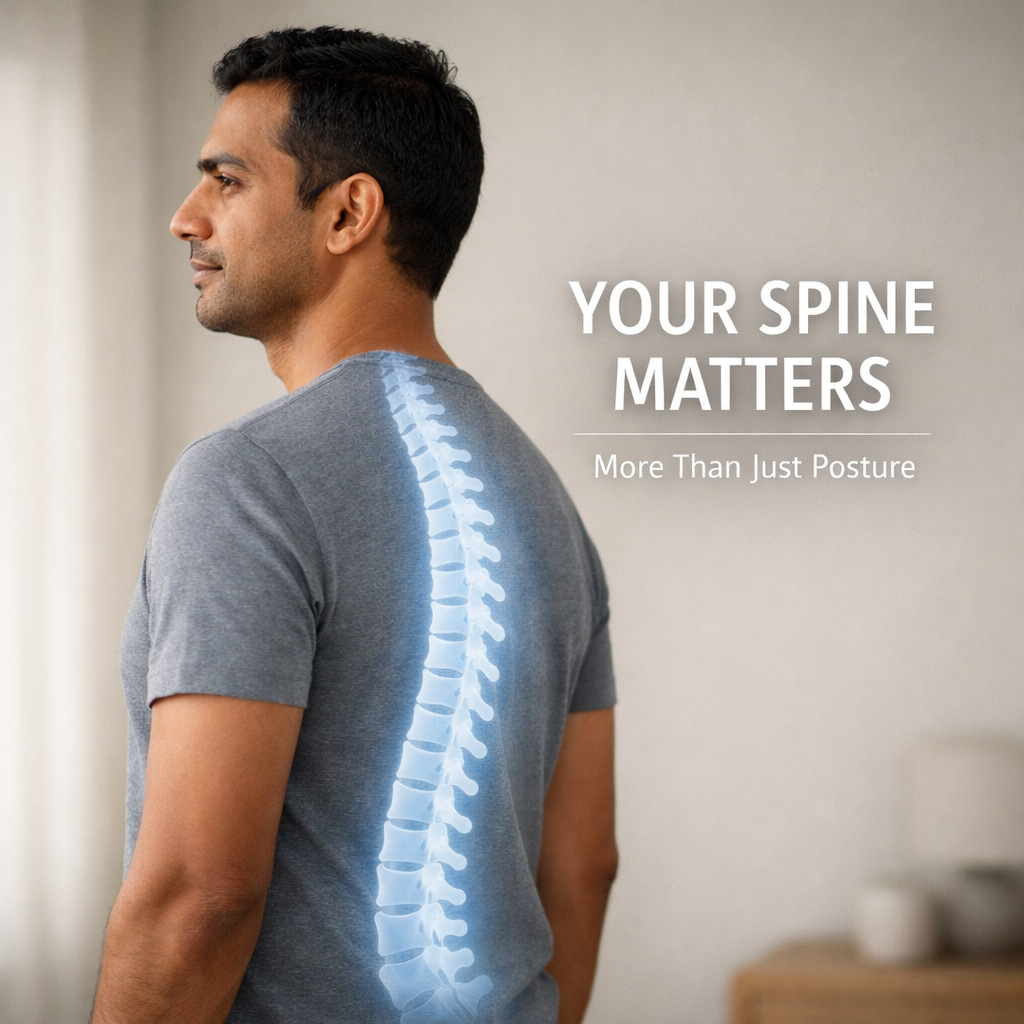
Your spine is not just a stack of bones. It is the central support system of your body — responsible for movement, balance, nerve communication, and even how tired or energetic you feel during the day.
Understanding how the spine really works is the first step toward protecting it.
The Spine Does More Than Hold You Upright
The spine has three critical roles:
1. Structural Support
It carries the weight of your head, torso, and daily movements. Poor alignment shifts this load unevenly, accelerating wear.
2. Movement Control
Every bend, twist, reach, and step depends on spinal coordination. When movement becomes repetitive or restricted, the spine compensates silently.
3. Nervous System Protection
The spinal cord runs through it. Compression, stiffness, or misalignment can affect nerve signals — often felt as pain, tingling, or fatigue.
Why Modern Life Is Hard on the Spine
The spine evolved for movement and variation, not static positions.
Modern habits create problems because they involve:
prolonged sitting
forward-head posture
constant screen use
minimal recovery time
repetitive daily patterns
The spine adapts to whatever it does most. Over time, poor positions stop feeling “wrong” — until pain finally appears.
Pain Is a Late Signal, Not the First One
Before pain shows up, the spine often goes through:
stiffness
reduced flexibility
uneven muscle tension
compensatory movement
These early signs are easy to ignore because they don’t hurt yet. But ignoring them allows small issues to turn into chronic problems.
Common Spine Problems People Don’t Notice Early
Neck stiffness that feels normal
Lower back tightness after sitting
Frequent fatigue without heavy activity
Reduced range of motion
Pain that comes and goes seasonally
These are not random. They are signals of a spine under constant load.
What Keeps the Spine Healthy Long-Term
✔ Movement Variety
The spine needs different movements — not just exercise, but frequent posture changes.
✔ Good Posture (Most of the Time, Not All the Time)
Perfect posture isn’t realistic. What matters is not staying in one bad position for too long.
✔ Strong Supporting Muscles
Core, back, hips, and shoulders protect the spine by sharing the load.
✔ Recovery and Circulation
Poor sleep, cold weather, stress, and inactivity reduce spinal recovery and increase stiffness.
Why Spine Issues Are Increasing in Younger People
Spine problems are no longer age-related. They’re lifestyle-related.
Young adults today experience:
tech neck
early disc stress
chronic back tightness
postural fatigue
This isn’t because bodies are weaker — it’s because habits are more repetitive.
When You Should Pay Attention
Consult a specialist if you notice:
recurring neck or back pain
stiffness lasting most of the day
pain that worsens in winter
numbness or tingling
pain returning despite rest
Early intervention prevents long-term damage.
Final Thought
Your spine remembers everything — how you sit, how you move, how you recover.
You don’t need extreme workouts or aggressive treatments to protect it.
You need awareness, balance, and timely care.
Take care of your spine early — so it doesn’t demand attention later.