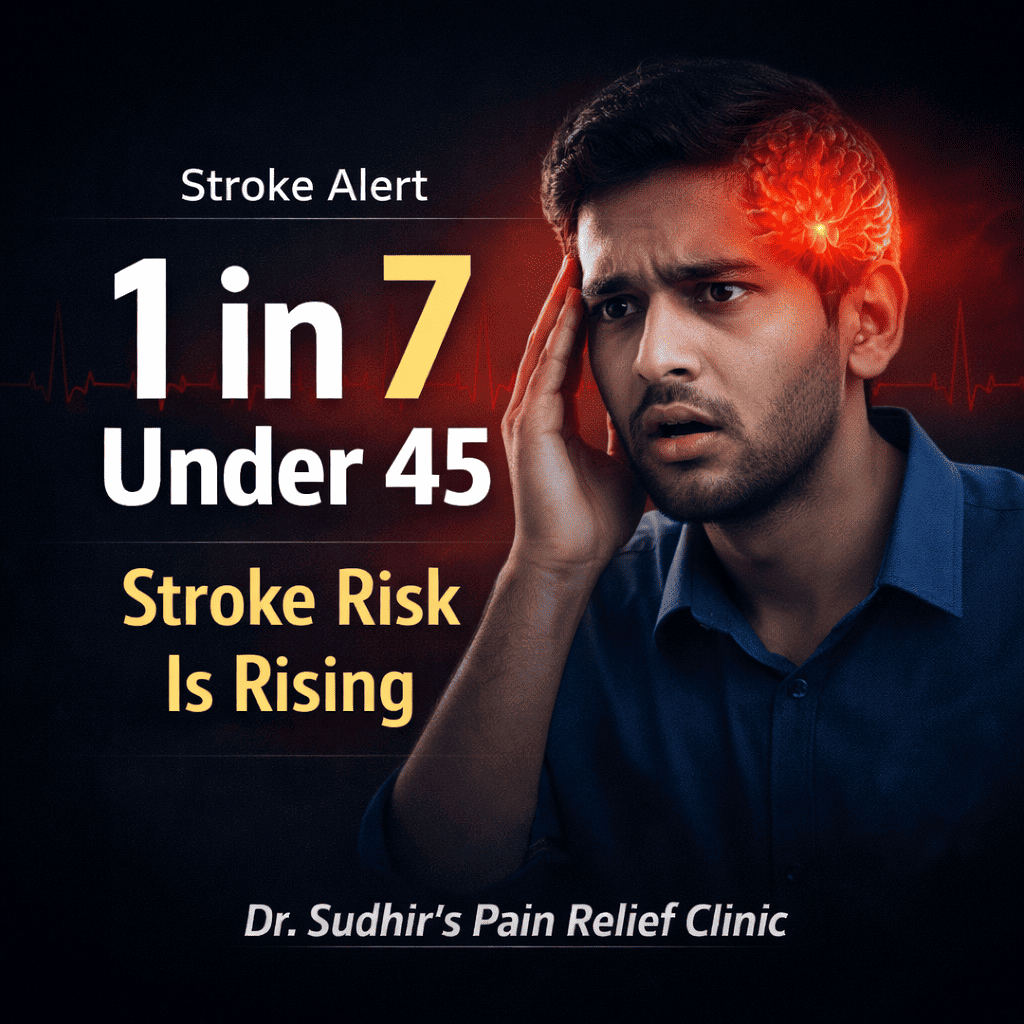
For decades, stroke was considered a disease of older age. But that assumption is rapidly changing. Recent data indicates that nearly 1 in 7 stroke patients in India are now under the age of 45 — a trend that is alarming doctors across the country.
This shift is more than just a statistic. It reflects how modern lifestyles, stress, and silent health risks are affecting younger adults in ways many people do not expect.
Stroke Is Getting Younger in India
Traditionally, stroke risk was associated with people above 60. Today, neurologists and emergency departments are seeing a noticeable rise in cases among:
working professionals
entrepreneurs
IT employees
students in high-stress environments
adults in their 30s and early 40s
The message is clear:
Stroke is no longer just an old-age problem.
Why Are Younger Adults at Risk?
Several modern lifestyle factors are contributing to this worrying trend.
1. Rising Hypertension (Often Undiagnosed)
High blood pressure remains the single biggest risk factor for stroke. Many young adults:
never check their BP
ignore borderline readings
assume they are “too young” for hypertension
Uncontrolled BP silently damages blood vessels in the brain.
2. Long Sitting Hours and Sedentary Lifestyle
Modern work culture often involves:
8–12 hours of sitting
minimal physical activity
work-from-home routines
excessive screen time
Prolonged inactivity contributes to:
poor circulation
weight gain
metabolic problems
increased vascular risk
3. Chronic Stress and Poor Sleep
Young professionals today face:
work pressure
financial stress
irregular sleep schedules
digital overload
Chronic stress keeps the body in a constant fight-or-flight state, which can:
raise blood pressure
increase inflammation
strain the cardiovascular system
Over time, this raises stroke risk.
4. Diabetes and Metabolic Syndrome
India is seeing earlier onset of:
diabetes
obesity
high cholesterol
These conditions accelerate blood vessel damage and significantly increase stroke risk — even in younger age groups.
5. Smoking, Alcohol, and Unhealthy Habits
Lifestyle choices such as:
smoking
vaping
excessive alcohol
processed food intake
can further increase the likelihood of early vascular events.
Early Warning Signs of Stroke (Never Ignore These)
Young adults often delay seeking help because they don’t suspect stroke. That delay can be dangerous.
Remember the FAST warning signs:
F — Face drooping
A — Arm weakness
S — Speech difficulty
T — Time to seek emergency help
Other possible symptoms:
sudden severe headache
sudden dizziness
loss of balance
vision problems
numbness on one side
Stroke is a medical emergency — minutes matter.
Why Early Prevention Matters
The encouraging news is that many stroke risk factors are modifiable.
Early lifestyle correction and medical monitoring can:
reduce blood pressure
improve circulation
control weight
stabilise blood sugar
reduce long-term risk
The earlier these steps begin, the better the protection.
Simple Steps Young Adults Should Start Today
✓ Check blood pressure regularly
✓ Stay physically active
✓ Avoid prolonged sitting
✓ Maintain healthy weight
✓ Prioritise quality sleep
✓ Manage stress levels
✓ Quit smoking and limit alcohol
✓ Get periodic health screening
Small habits done consistently can significantly reduce future risk.
The Bigger Message
The statistic that 1 in 7 stroke patients in India are under 45 is a wake-up call — not just for doctors, but for every young adult.
Modern life has changed how early lifestyle diseases appear. The body may look young on the outside, but silent risk factors can build quietly over time.
Final Thought
Stroke in young adults is no longer rare — but in many cases, it is preventable.
Awareness, early screening, and timely lifestyle correction can make the difference between long-term health and sudden medical emergencies.
If you are under 45, don’t assume you are safe.
Start protecting your health today — your future brain depends on it.